Sutco UK Selects Lindner Polaris 2800 and Komet 2800 Shredders
When designing a modern waste processing plant, selecting the right shredding technology can have a significant impact on throughput, output quality, energy consumption and long-term plant availability.
For a major UK project, Sutco RecyclingTechnik UK selected Lindner shredding technology exclusively, choosing a combination of Polaris 2800 one-step shredders and Komet 2800 secondary shredders.
The major contract included three Lindner Polaris 2800 shredders and two Komet 2800 universal shredders, demonstrating the flexibility of Lindner technology across different stages of waste processing.
The project also highlights an important principle in modern waste processing: the best shredding solution isn’t necessarily about choosing one machine. It is about selecting technology that works effectively within the complete processing system.
Sutco UK Chooses Lindner Shredding Technology
Sutco RecyclingTechnik is an established international plant builder specialising in waste processing and recycling systems.
The company has developed hundreds of references globally and operates subsidiaries in several countries, including the UK. Its approach is centred around providing efficient, integrated and turnkey recycling solutions.
For this major project, Sutco UK opted exclusively for Lindner technology.
The contract included:
- 3 × Lindner Polaris 2800
- 2 × Lindner Komet 2800
The machines were selected for different roles within the planned waste processing applications.
The Polaris 2800 would be used for one-step processing of pre-sorted waste, while the Komet 2800 machines would provide high-performance secondary shredding.
Why Choose the Lindner Polaris 2800?
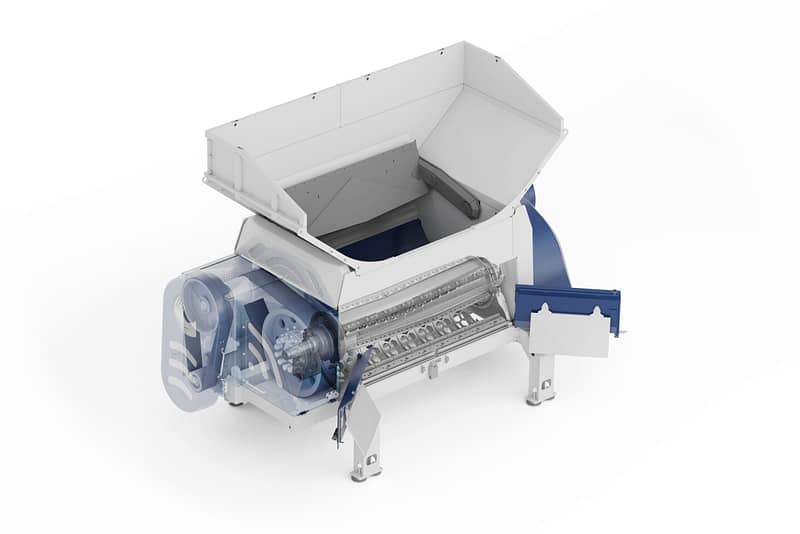
The Lindner Polaris 2800 is a single-shaft industrial shredder developed specifically for high-throughput one-step processing.
It is particularly suited to applications where operators need to process untreated or pre-sorted municipal, commercial and industrial waste into a controlled fuel fraction.
For the Sutco project, the Polaris 2800 was specified to reduce pre-sorted waste to a particle size of less than 75 mm in a single operation.
This is one of the major advantages of one-step shredding.
Rather than requiring several size-reduction stages, suitable material can be processed directly to the required specification in one shredding stage.
This can potentially simplify the plant layout, reduce material handling and improve overall process efficiency.
What is One-Step Waste Shredding?
One-step shredding is a processing approach in which waste is reduced to the required output specification through a single shredding stage.
Traditionally, some waste processing systems use multiple shredders:
Primary shredder → Separation → Secondary shredder → Final output
A one-step system can simplify this process for suitable materials:
Waste → One-step shredder → Final output
The suitability of this approach depends on the incoming waste, required throughput and final particle-size specification.
The Polaris was developed specifically for this type of application.
The Lindner Polaris is a specialised single-shaft shredder for one-step processing of untreated municipal, industrial and commercial waste, including applications involving recovered fuels.
Why Was the Polaris 2800 Suitable for the Sutco Project?
Sutco identified several important requirements for the shredding equipment.
The machines needed to provide:
- High throughput
- Consistent output
- High availability
- Straightforward maintenance
- Reliable operation
- Controlled particle size
Machine continuity and availability were particularly important considerations for the project.
The Polaris 2800’s design was well suited to these requirements.
Its robust single-shaft configuration combines high torque with controlled material processing, while the machine is designed for continuous industrial operation.
Simple and Robust Design
One of the reasons Sutco selected the Polaris was its straightforward mechanical design.
The machine offers a combination of robust construction and easy maintenance, which are important considerations in a demanding waste processing environment.
This is particularly relevant when looking at the lifetime cost of an industrial shredder.
A machine’s purchase price is only one part of the investment.
Operators also need to consider:
- Maintenance requirements
- Wear component costs
- Energy consumption
- Availability
- Downtime
- Service support
- Spare parts availability
- Expected operating life
A machine that is easy to maintain and keeps production running can deliver significant value over its lifetime.
The Lindner Komet 2800
While the Polaris was selected for one-step processing, Sutco also chose the Lindner Komet 2800 for secondary shredding applications.
The Komet is designed for high-performance secondary shredding where controlled size reduction and consistent output are required.
It is particularly relevant to applications such as:
- SRF production
- RDF production
- Commercial waste processing
- Industrial waste processing
- Municipal waste
- Pre-shredded waste
- Alternative fuel production
The Komet range provides high-performance secondary shredding technology designed for precision size reduction and high-quality SRF production.
Polaris vs Komet: What’s the Difference?
Although both machines are Lindner shredders, they perform different roles within a waste processing system.
Lindner Polaris
The Polaris is designed for one-step shredding.
It can take suitable untreated or pre-sorted waste and produce a defined output in a single processing stage.
Typical applications include:
- RDF production
- SRF production
- Alternative fuel processing
- One-step waste shredding
Lindner Komet
The Komet is designed primarily for secondary shredding.
It is used when material has already undergone initial processing and requires further size reduction and refinement.
Typical applications include:
- SRF production
- RDF production
- Secondary waste shredding
- Fine or controlled size reduction
The correct machine therefore depends on the material, process configuration and required final specification.
Why Availability Matters in Waste Processing
Waste processing plants often operate continuously, meaning equipment availability can directly affect production output.
A shredder that stops unexpectedly can create a knock-on effect throughout the plant.
A breakdown can result in:
- Lost production
- Idle labour
- Disrupted sorting
- Delayed deliveries
- Reduced plant utilisation
- Additional maintenance costs
This is why machine continuity and availability are critical considerations when selecting shredding equipment for a major processing project.
The Polaris was particularly attractive because of its robust design and uncomplicated maintenance requirements.
Maintenance and Service Support
Industrial shredders operate in some of the harshest processing environments.
Wear components are inevitably subjected to significant loads, making preventative maintenance and access to replacement parts an important part of machine ownership.
For high-throughput processing facilities, access to technical assistance and replacement parts can make a significant difference to overall plant availability.
A reliable shredder is important, but so is having the right support behind it.
The Importance of Choosing the Right Shredder Partner
A successful shredding installation involves more than selecting a machine.
The wider support package should also be considered.
Application knowledge
Understanding the material and process requirements before recommending a machine.
Installation
Ensuring the shredder is correctly integrated into the processing system.
Commissioning
Making sure the equipment performs as expected once operational.
Maintenance
Keeping the machine running reliably throughout its operating life.
Spare parts
Ensuring critical wear and replacement components are available when needed.
Engineering support
Providing technical expertise when the plant encounters an unexpected problem.
This is particularly important for large waste processing installations where a single equipment failure can affect the entire production line.
Mach Tech and Lindner Shredding Technology
Mach Tech Services is the sole UK and Ireland distributor for Lindner Recyclingtech, supplying industrial shredding technology across the waste and recycling sector.
The Lindner range available through Mach Tech includes:
- Primary shredders
- Secondary shredders
- Universal shredders
- One-step shredders
- Mobile shredders
Applications include:
- SRF production
- RDF production
- Alternative fuel processing
- Waste wood
- Plastics recycling
- Commercial waste
- Industrial waste
- Bulky waste
- Mixed waste streams
Mach Tech’s support extends beyond machine supply, with services covering consultation, installation, repair, maintenance, engineering and spare parts.
Why Lindner Technology for SRF and RDF?
Lindner has extensive experience in recovered-fuel processing, with its machinery designed around the specific challenges involved in converting waste into usable alternative fuels.
Mach Tech’s SRF solutions include the Jupiter for primary shredding, Komet for secondary shredding and Polaris for one-step processing, allowing the processing configuration to be matched to the application.
This means the system can be designed around:
Material → Process → Throughput → Output → Fuel specification
Rather than simply selecting a shredder based on machine size.
Choosing Between One-Step and Two-Stage Shredding
One of the most important decisions when developing an RDF or SRF processing system is whether to use a one-step or multi-stage shredding process.
One-step processing
A machine such as the Polaris can provide a defined output in a single shredding stage.
Potential advantages include:
- Simplified plant configuration
- Reduced material handling
- Fewer processing stages
- Potentially lower footprint
- Straightforward operation
- High throughput
Two-stage processing
A combination of primary and secondary shredders can provide greater control over the material throughout the process.
This can be advantageous where:
- Incoming material is particularly difficult
- Significant separation is required
- A precise final particle size is needed
- The process requires staged size reduction
- Different materials need to be treated at different stages
Neither approach is universally better.
The correct choice depends on the material and the required output.
A Major Lindner Shredding Installation
The Sutco UK project demonstrates how different Lindner shredding technologies can be combined across a large-scale waste processing operation.
The selection of three Polaris 2800 shredders and two Komet 2800 shredders provided Sutco with dedicated equipment for both one-step and secondary shredding applications.
It also demonstrates why machine reliability, maintenance and technical support are critical factors when selecting industrial shredding equipment.
For high-throughput waste processing, the shredder needs to do more than simply reduce material in size.
It needs to perform consistently, remain available and integrate effectively with the wider processing system.
Looking for a Polaris or Komet Shredder?
Whether you’re developing a new SRF or RDF processing plant, upgrading an existing system or replacing an underperforming shredder, the correct equipment configuration can make a significant difference to production and operating costs.
Mach Tech can help assess your application and identify whether a Lindner Polaris, Komet, Jupiter or another Lindner shredding technology is appropriate for your requirements.
With more than £1 million of spare and wear parts held in stock, alongside dedicated engineering and service support, we can support your equipment throughout its operating life.
Speak to the Mach Tech team today.
01706 838246
sales@machtechservices.com
Frequently Asked Questions
What is the Lindner Polaris 2800?
The Lindner Polaris 2800 is a single-shaft industrial shredder designed for one-step processing of suitable municipal, commercial and industrial waste. It can produce a defined fuel fraction in a single shredding stage.
Why did Sutco UK choose the Lindner Polaris 2800?
Sutco selected the Polaris 2800 because of its robust design, high throughput, straightforward maintenance and ability to process pre-sorted waste to below 75 mm in a single operation.
How many Lindner shredders did Sutco UK order?
The major contract included three Polaris 2800 shredders and two Komet 2800 universal shredders.
What is the Lindner Komet 2800 used for?
The Komet 2800 is a high-performance secondary/universal shredder designed for applications requiring further size reduction and controlled output, including SRF and RDF production.
What is the difference between Polaris and Komet?
The Polaris is primarily designed for one-step processing of suitable waste, while the Komet is used for high-performance secondary shredding and further size reduction.
Is the Polaris suitable for SRF production?
Yes. The Polaris was developed for one-step processing applications involving recovered fuels and can be configured to produce controlled particle sizes for SRF and RDF applications.
What particle size can the Polaris 2800 produce?
The exact output depends on the application and screen configuration. In the Sutco project, the Polaris 2800 was specified to reduce pre-sorted waste to less than 75 mm in a single operation.
Is the Polaris a single-shaft shredder?
Yes. The Polaris is a single-shaft industrial shredder designed for high-throughput one-step processing.
Why is shredder availability important?
Downtime on a high-throughput waste processing plant can result in lost production, labour costs and disruption to downstream processing. For this reason, machine reliability, maintenance requirements and service support should all be considered when selecting a shredder.
Can the Polaris process difficult waste?
The Polaris is designed for demanding waste streams and high-throughput processing applications. The correct machine configuration depends on the material characteristics, contamination levels, required throughput and final output specification.
What is the difference between RDF and SRF?
RDF stands for Refuse Derived Fuel and is a broad term for fuel produced from suitable waste materials. SRF, or Solid Recovered Fuel, is generally produced to more controlled specifications relating to factors such as particle size, moisture, calorific value and contaminants.
What is one-step waste shredding?
One-step waste shredding is a process where suitable waste is reduced to the required output specification in a single shredding stage. This can potentially simplify a processing line by reducing the need for multiple size-reduction stages.
Can the Polaris and Komet be used in the same waste processing plant?
Yes. The two machines can perform complementary roles within a processing system. The Polaris can be used for one-step processing, while the Komet can provide secondary size reduction where required.
How important are spare parts and engineering support?
Spare parts and engineering support are important considerations for any high-throughput industrial shredder. Rapid access to genuine wear parts and technical expertise can help minimise downtime and keep the processing plant operating efficiently.
Can Mach Tech supply Lindner Polaris and Komet shredders in the UK?
Yes. Mach Tech Services is the sole UK and Ireland distributor for Lindner Recyclingtech and can provide advice on Polaris, Komet and other Lindner industrial shredders, as well as installation, maintenance, engineering and spare parts support.
How do I choose the right Lindner shredder?
The right shredder depends on several factors, including the type of waste being processed, required throughput, target particle size, contamination levels, process configuration and final fuel specification. Mach Tech can assess your application and recommend the most appropriate Lindner technology.
Find Your Ideal Shredding Solution, Speak to Our Experts
Looking for the right setup for your operation or need guidance on applications, throughput or particle size? Our specialists are here to help.
Whether you’re exploring the capabilities of the Lindner range or comparing shredding solutions, we’ll work with you to identify the best fit for your needs.
Call us today on 01706 838 246, or get in touch for expert advice, pricing, or to arrange a site visit.
You can also use the form to send your enquiry and a member of our team will be in touch shortly.
"*" indicates required fields