SRF Shredder: How the Right Shredding Technology Improves SRF Production
Producing high-quality Solid Recovered Fuel (SRF) requires more than simply shredding waste.
The right SRF shredder needs to deliver consistent particle size, high throughput, reliable operation and the ability to cope with the constantly changing characteristics of commercial, industrial and municipal waste.
For waste processors, these factors have a direct impact on the quality and value of the finished fuel.
One company that understands the importance of getting the shredding process right is Wheeldons Waste.
After years of experience operating different shredders, Wheeldons decided to replace its previous one-step shredder with a Lindner Polaris, looking for improved throughput, a cleaner output and a more effective solution for its SRF production.
The result demonstrated the difference that the right shredding technology can make.
What is SRF?
Solid Recovered Fuel, commonly known as SRF, is a processed waste-derived fuel produced from suitable non-hazardous waste.
Rather than sending combustible waste directly to disposal, suitable material can be processed, sorted and shredded to create a fuel product for applications such as energy recovery and industrial processes.
The quality of the finished SRF depends on several factors, including:
- Feedstock composition
- Moisture content
- Contamination
- Particle size
- Calorific value
- Chlorine and other chemical characteristics
- Processing technology
- Separation efficiency
This makes the shredding stage particularly important.
A poorly configured shredder can create excessive oversize, inconsistent particle sizes, contamination issues and unnecessary operating costs.
A properly configured SRF shredder, on the other hand, can help create a much more consistent and valuable fuel product.
Why is the Shredder So Important to SRF Production?
Shredding is one of the most important mechanical processes in an SRF production system.
The objective is not simply to make waste smaller.
The shredder needs to produce material that is suitable for the next stage of the process and, ultimately, meets the requirements of the intended fuel application.
For an SRF producer, key performance considerations include:
Throughput
How many tonnes of material can be processed per hour?
High throughput is essential for large waste processing operations where thousands of tonnes need to be processed every year.
Particle size
Is the shredder producing the required fuel fraction?
The correct particle size depends on the application and specification of the finished SRF.
Consistency
Is the machine producing a consistent material rather than excessive oversize and fines?
Consistency is particularly important when the finished product is being supplied to customers with specific fuel requirements.
Contamination
Can the process effectively manage unwanted materials?
Waste streams can contain contaminants and foreign objects, so the shredder needs to be robust enough to cope with difficult material.
Operating costs
How much does it cost to produce each tonne?
Energy consumption, wear parts, maintenance and downtime can all contribute significantly to the cost of producing SRF.
Reliability
Can the shredder operate consistently?
For a high-volume waste processor, every hour of unplanned downtime can have a significant financial impact.
Wheeldons Waste: Looking for a Better SRF Shredder
Wheeldons Waste operates four transfer stations across Greater Manchester and processes commercial, industrial, construction and some municipal waste.
The company operates seven picking lines, allowing recyclable materials to be recovered before the remaining material is transferred to its facility in Ramsbottom, Bury.
It was here that Wheeldons installed the Lindner Polaris.
The company had already gained considerable experience with industrial shredders and wanted to improve the performance of its one-step shredding process.
After attending a Mach Tech open day in Cumbria and seeing the Lindner Polaris operating, James Wheeldon, Director of Wheeldons Waste, decided that the machine offered the capabilities the business needed.
Why Did Wheeldons Replace Its Previous Shredder?
One of the main challenges was output quality.
Wheeldons’ previous one-step shredder used a 120 mm screen and produced approximately 90 mm material at around 14 tonnes per hour.
While this provided a usable output, the company experienced issues with oversize material and contamination.
The machine was also being pushed towards its maximum operating capacity.
Wheeldons wanted something different.
The company was looking for:
- Greater throughput
- A smaller and more consistent particle size
- Less oversize material
- Better control of contamination
- Improved SRF quality
- Greater confidence when processing difficult waste
- Reliable operation
- Easier foreign-material removal
The Lindner Polaris provided an alternative approach.
The Lindner Polaris One-Step Shredder
The Lindner Polaris is a specialised single-shaft shredder designed for one-step processing of untreated municipal, commercial and industrial waste.
The machine is particularly suited to recovered fuel applications, including SRF and RDF production.
The current Polaris range includes:
- Polaris 1800
- Polaris 2200
- Polaris 2800
The machines are designed to produce mid-calorific fuel fractions in the region of 40–120 mm, depending on configuration, screen selection and application.
The Polaris combines a low-speed, high-torque drive system with a robust shear cutting system, allowing it to process demanding waste streams while maintaining controlled output.
From 90 mm to a Cleaner 50 mm Product
One of the most significant differences experienced by Wheeldons was the change in output.
The company’s previous machine used a 120 mm screen and produced approximately 90 mm material at around 14 tonnes per hour.
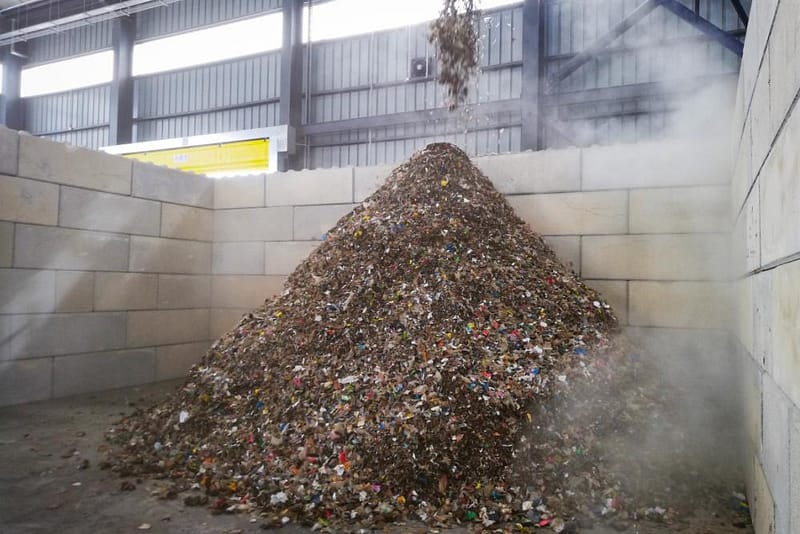
The Lindner Polaris was configured with a 60 mm screen and produced approximately 50 mm material at around 18 tonnes per hour in the application described in the original case study.
For Wheeldons, the improvement wasn’t simply about producing more tonnes.
The smaller and cleaner output meant the company could produce a more consistent fuel product and improve the quality of the SRF it was able to sell.
This is an important distinction.
The best SRF shredder isn’t necessarily the machine that produces the highest tonnes per hour.
It is the machine that produces the right material, at the required throughput, at an economically sustainable cost per tonne.
Cleaner SRF Means Greater Value
For an SRF producer, output quality can have a direct impact on commercial value.
If a shredder creates excessive oversize, the material may require additional processing.
If the particle size is inconsistent, the product may not meet the requirements of a particular customer.
If contaminants remain within the fuel, this can create problems further downstream.
By improving the quality and consistency of the shredded material, the overall value of the recovered fuel can potentially be increased.
This was one of the key reasons Wheeldons chose the Polaris.
The company reported that the machine produced a cleaner, smaller product which allowed it to sell more SRF.
One-Step SRF Shredding
One of the major advantages of the Polaris is its ability to process suitable waste in a single shredding stage.
Traditional SRF production can involve:
Primary shredding → Separation → Secondary shredding → Screening → SRF
A one-step system can potentially simplify this process:
Waste → One-step shredding → SRF
Of course, the most appropriate process depends on the incoming waste, contamination levels and required fuel specification.
A two-stage system can provide additional control for particularly difficult applications.
However, where the material and required output are suitable, one-step processing can provide significant advantages.
These can include:
- Fewer processing stages
- Reduced material handling
- Lower plant complexity
- Reduced footprint
- Potentially lower maintenance requirements
- Consistent output
- High throughput
Mach Tech supplies Lindner technology for both one-step and multi-stage SRF production, allowing the equipment to be selected around the specific application rather than forcing every customer into the same process.
Handling Foreign Materials
Waste processing inevitably involves contaminants.
Even well-managed waste streams can contain materials that shouldn’t enter the shredder.
This makes foreign-material protection particularly important.
The Polaris uses a torque-limiting safety clutch designed to protect the drive system when blockages or foreign objects create excessive torque.
The machine also incorporates hydraulic access systems that allow operators to remove foreign materials and access the cutting components efficiently.
For a high-throughput SRF producer, this can make a significant difference.
The objective isn’t simply to prevent damage.
It is also to make recovery from an interruption as quick and straightforward as possible.
The Polaris Countershaft Drive
Another important feature of the Lindner Polaris is its countershaft drive.
The system stores and releases rotational energy according to the load requirements of the shredding process.
When difficult material enters the cutting chamber, additional stored energy can be released to provide increased cutting power.
Lindner states that this approach can provide high cutting performance while improving overall energy efficiency.
For an SRF producer, energy consumption is an important part of the overall cost-per-tonne calculation.
The goal is therefore not simply to maximise horsepower.
It is to maximise the amount of usable fuel produced for the energy consumed.
Consistent Particle Size
Particle size is one of the most important considerations when selecting an SRF shredder.
The required size depends on the intended application.
Different end users may have different requirements based on:
- Fuel handling systems
- Feeding equipment
- Combustion technology
- Storage
- Transportation
- End-user specifications
- Calorific value requirements
The Polaris uses interchangeable screen configurations to control the final output size.
Its current hydraulically operated screen system is designed to provide quick access for inspection, servicing and screen replacement.
This allows the shredder to be configured around the requirements of the individual application.
SRF Production Is About More Than Throughput
It can be tempting to compare shredders based purely on tonnes per hour.
But throughput is only one part of the equation.
A machine processing 20 tonnes per hour isn’t necessarily more profitable than a machine processing 15 tonnes per hour if it produces a significantly better fuel product.
The more useful calculation is:
Cost per tonne + product quality + availability + maintenance + energy consumption
This is why SRF producers should consider the entire process when selecting shredding equipment.
A shredder should be assessed based on its ability to deliver the required:
Material → Throughput → Particle Size → Fuel Specification → Cost per Tonne
What Makes a Good SRF Shredder?
When selecting an SRF shredder, there are several important questions to ask.
1. What throughput do you need?
Calculate your required tonnes per hour based on annual tonnage, operating hours and planned downtime.
2. What particle size does your customer require?
The machine needs to be configured around the final fuel specification rather than simply selecting the biggest machine available.
3. How difficult is your feedstock?
Mixed waste, bulky waste and contaminated material require a different shredding solution from clean production waste.
4. How much oversize can you tolerate?
Excessive oversize can increase handling and potentially require additional processing.
5. What does the machine cost to run?
Consider electricity or fuel consumption, wear parts, maintenance and downtime.
6. How quickly can foreign materials be removed?
A machine may eventually recover from an obstruction, but the speed and simplicity of that process can have a major impact on availability.
7. What technical support is available?
A shredder is a significant investment.
The support available after installation can be just as important as the machine itself.
The Importance of SRF Shredder Support
One of the comments from Wheeldons’ James Wheeldon following the Polaris installation highlighted the level of service provided by Mach Tech.
He specifically noted the standard of service during the installation process and the impressive stock of parts held by Mach Tech.
This is an important consideration when buying industrial shredding equipment.
A machine can be highly capable, but if essential wear parts aren’t available when required, downtime can quickly become expensive.
Mach Tech holds more than £1 million worth of spare and wear parts in stock, allowing many components to be dispatched quickly when customers need them.
Mach Tech also provides:
- Installation
- Commissioning
- Preventative maintenance
- Breakdown support
- Repairs
- Precision engineering
- Welding
- Hardfacing
- Full shredder rebuilds
- Spare and wear parts
Mach Tech and Lindner SRF Shredding
Mach Tech Services is the sole distributor of Lindner Recyclingtech shredders in the UK and Ireland.
The Lindner range covers different stages of waste processing, meaning the right technology can be selected according to the specific application.
For example:
Lindner Jupiter
A heavy-duty primary shredder suitable for demanding incoming waste and the first stage of a multi-stage SRF process.
Lindner Komet
A high-performance secondary shredder designed for controlled size reduction and high-quality fuel production.
Lindner Polaris
A specialised one-step shredder designed to process suitable untreated waste directly into a recovered fuel fraction.
This range gives Mach Tech the ability to look at the entire process rather than simply recommending one machine.
One-Step or Two-Stage SRF Shredding?
There isn’t a universal answer.
The right system depends on the material and required output.
A one-step SRF shredder such as the Polaris can be particularly attractive when:
- The input material is suitable
- A defined fuel fraction is required
- High throughput is important
- Plant footprint is limited
- Simplifying the process is a priority
- Reduced material handling is desirable
A two-stage SRF shredding system may be more appropriate where:
- The incoming material is particularly difficult
- Large objects need substantial primary size reduction
- More control over final particle size is required
- Additional separation is required between shredding stages
- The fuel specification is particularly demanding
Mach Tech can assess the application and recommend the most appropriate configuration.
The Future of SRF Production
As waste processors look to extract greater value from residual waste, efficient SRF production is becoming increasingly important.
The economics of SRF production depend on much more than simply moving waste through a shredder.
Operators need to maximise the amount of usable fuel produced while controlling:
- Energy consumption
- Wear costs
- Maintenance
- Labour
- Downtime
- Material handling
- Product quality
The right shredding technology can therefore have a significant impact on the overall economics of the operation.
Wheeldons Waste’s experience with the Lindner Polaris demonstrates how changing the shredding technology can improve both throughput and output quality.
Staying Ahead of the SRF Game
Wheeldons Waste’s decision to invest in the Lindner Polaris was driven by a straightforward objective:
Produce better SRF, at a higher throughput, while improving the economics of the process.
The move from its previous one-step shredder to the Polaris delivered a smaller and cleaner output while increasing the throughput achieved in the application described in the original case study.
For an SRF producer, that combination can be extremely valuable.
The lesson is simple.
Don’t choose an SRF shredder based on tonnes per hour alone.
Look at the complete picture:
Throughput + particle size + product quality + reliability + energy + wear + downtime + support.
That is what determines the true performance of an SRF shredding system.
If you are looking to improve SRF production, increase throughput or produce a cleaner and more consistent recovered fuel, Mach Tech Services can help you identify the right Lindner shredding solution for your operation.
Call 01706 838246 or email sales@machtechservices.com to discuss your application.
Frequently Asked Questions
What is an SRF shredder?
An SRF shredder is an industrial shredder used to process suitable waste into a controlled particle size for Solid Recovered Fuel production. The right machine depends on the waste stream, required throughput and final fuel specification.
What is Solid Recovered Fuel?
Solid Recovered Fuel, or SRF, is a processed waste-derived fuel produced from suitable waste materials. It is manufactured to defined characteristics for use in energy recovery and industrial applications.
What is the best shredder for SRF production?
There isn’t one shredder that is best for every SRF application. Lindner offers different technologies for different stages of the process, including the Jupiter for primary shredding, Komet for secondary shredding and Polaris for suitable one-step applications.
Can the Lindner Polaris produce SRF?
Yes. The Polaris is designed for one-step processing of untreated municipal, commercial and industrial waste and is particularly suited to recovered fuel applications, including SRF production.
What size material can a Polaris produce?
Current Lindner information states that Polaris machines can produce mid-calorific fuel fractions in the region of 40–120 mm, depending on configuration and application.
What is one-step SRF shredding?
One-step SRF shredding means processing suitable waste into the required fuel fraction in a single shredding stage rather than using separate primary and secondary shredders.
What are the benefits of one-step SRF shredding?
Potential benefits include reduced process complexity, fewer material handling stages, reduced plant footprint, consistent output and potentially lower operating and maintenance costs.
Can an SRF shredder handle contaminated waste?
The suitability depends on the individual machine and material. The Lindner Polaris is specifically designed for untreated municipal, commercial and industrial waste and incorporates features designed to provide resistance to foreign objects.
How much does an SRF shredder cost?
The cost depends on the machine model, configuration, feed system, output specification and wider plant requirements. A proper application assessment is required before providing an accurate investment figure.
How do I reduce the cost per tonne of SRF?
Reducing cost per tonne involves looking beyond purchase price. Throughput, energy consumption, wear-part costs, maintenance, downtime and output quality all contribute to the overall economics of SRF production.
What is the difference between SRF and RDF?
RDF stands for Refuse Derived Fuel, while SRF refers to Solid Recovered Fuel. SRF is generally produced to more controlled specifications than RDF, with defined characteristics depending on the intended application.
Is the Lindner Polaris suitable for RDF as well as SRF?
Yes. The Polaris is designed for one-step processing of untreated waste and can be used for both RDF and SRF applications, depending on the required output specification.
What other Lindner shredders can be used for SRF production?
Lindner’s range includes the Jupiter, Komet and Polaris, among others. Jupiter can be used for primary shredding, Komet for secondary shredding and Polaris for one-step applications.
Who supplies Lindner SRF shredders in the UK?
Mach Tech Services is the sole distributor for Lindner Recyclingtech shredders in the UK and Ireland, providing machine supply, installation, engineering, maintenance and parts support.
Can Mach Tech help design an SRF shredding system?
Yes. Mach Tech can assess your waste stream, throughput requirements, desired particle size and fuel specification before recommending the most suitable Lindner shredding technology.
How can I discuss an SRF shredding project with Mach Tech?
Contact Mach Tech Services on 01706 838246 or email sales@machtechservices.com to discuss your SRF production requirements.

James Wheeldon
Director
"Mach Tech gives an excellent standard of service, and this made life a lot easier in the process, when installing the Polaris. I was Pleasantly surprised and very impressed by the level of stock Mach Tech holds and can supply".
Find Your Ideal Shredding Solution, Speak to Our Experts
Looking for the right setup for your operation or need guidance on applications, throughput or particle size? Our specialists are here to help.
Whether you’re exploring the capabilities of the Lindner range or comparing shredding solutions, we’ll work with you to identify the best fit for your needs.
Call us today on 01706 838 246, or get in touch for expert advice, pricing, or to arrange a site visit.
You can also use the form to send your enquiry and a member of our team will be in touch shortly.
"*" indicates required fields