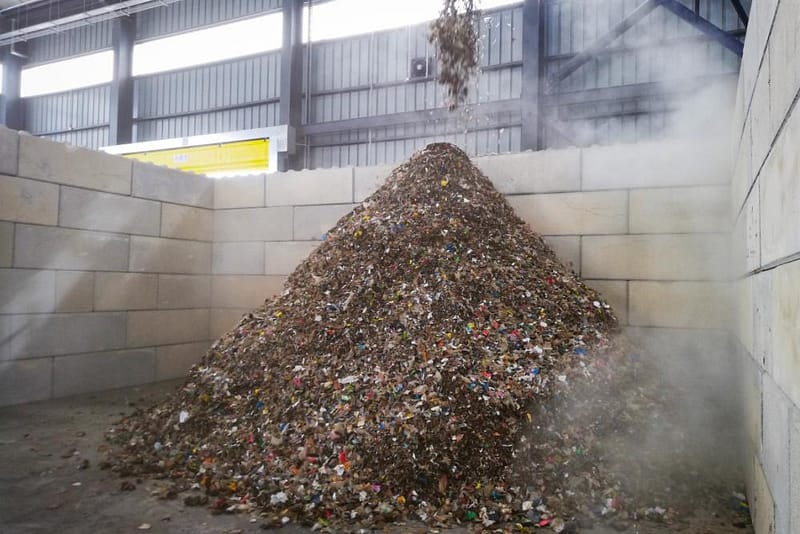
Lindner Polaris, One-Step Shredding Technology for SRF Production
When North West Recycling wanted to take its waste processing operation to the next level, it wasn’t looking for an ordinary industrial shredder.
The company wanted a machine capable of delivering high throughput, consistent output and low operating costs, while producing material suitable for solid recovered fuel (SRF).
The answer was the Lindner Polaris.
Following extensive discussions between North West Recycling, Mach Tech Services and Lindner Recyclingtech, the company became the first operator in the UK to benefit from Lindner’s groundbreaking Polaris shredding technology.
The installation represented an important milestone for North West Recycling, Mach Tech and Lindner – and demonstrated the potential of one-step waste shredding for modern recycling operations.
The challenge: finding the right one-step shredder
North West Recycling operates alongside its sister company, Brampton Skip Hire, from a 16-acre site at Kingmoor Park in Carlisle.
The company operates a substantial waste recycling facility and has continually invested in technology to improve both its recycling processes and the quality of the products produced from recovered waste.
In 2016, North West Recycling approached Mach Tech Services with a specific requirement.
They needed a shredding solution capable of:
- Maximising throughput
- Minimising oversize material
- Producing a consistent output
- Preparing material for SRF production
- Reducing processing costs
- Handling demanding waste streams
The brief was clear: find a machine that could achieve the required output in a single shredding stage.
At the time, Lindner was developing a machine specifically designed around this concept.
That machine was the Polaris.
Introducing the Lindner Polaris
The Polaris is a highly specialised single-shaft industrial shredder designed for one-step processing of untreated municipal, commercial and industrial waste.
Lindner developed the machine specifically to address the demands of producing recovered fuels efficiently in a single process.
The current Polaris range includes the Polaris 1800, 2200 and 2800. Depending on configuration and application, the machines are designed to produce mid-calorific fuels in the region of 40–120 mm.
For North West Recycling, the machine offered exactly the combination of performance and efficiency the company was looking for.
What is one-step shredding?
Traditional waste processing systems can require multiple stages of size reduction.
A primary shredder may initially reduce the material, with a secondary shredder then producing the final fuel specification.
One-step shredding takes a different approach.
The aim is to process suitable untreated waste directly into a consistent final fraction in one shredding stage.
Lindner describes the Polaris as a one-step solution for processing municipal, industrial and commercial waste into mid-calorific fuels suitable for applications such as co-incineration in cement works.
This can potentially reduce the complexity of the processing plant and remove the need for a separate secondary shredding stage.
For waste processors, that can translate into potential savings in:
- Capital equipment
- Energy consumption
- Maintenance
- Wear parts
- Labour
- Plant footprint
- Cost per tonne
The exact benefits depend on the feedstock, output specification and overall plant configuration.
Powerful shredding performance
One of the defining characteristics of the Lindner Polaris is its enormous transmission power.
The machine uses a low-speed, high-torque shredding principle, allowing it to apply substantial force to difficult waste materials.
This is particularly important when processing untreated waste, where the feedstock can contain bulky, heavy or inconsistent materials.
Lindner’s countershaft drive also uses flywheel energy storage to provide additional power when required. The manufacturer states that this design can deliver significantly higher throughput compared with drives without comparable flywheel mass.
The result is a shredder designed around continuous, high-performance waste processing.
Designed for difficult waste streams
Waste destined for SRF production is rarely uniform.
Depending on the source, it can contain a mixture of:
- Commercial waste
- Industrial waste
- Municipal waste
- Bulky waste
- Plastics
- Textiles
- Paper and cardboard
- Wood
- Other combustible materials
The shredder therefore needs to be robust enough to cope with constantly changing material characteristics.
Lindner specifically designed the Polaris to handle untreated and potentially bulky feedstock while maintaining reliable one-step processing.
Consistent output for SRF production
High throughput is important, but producing the right material is just as critical.
For SRF production, particle size and consistency can influence downstream handling and the suitability of the finished fuel for its intended application.
The Polaris uses a single-shaft cutting system and configurable screen technology to control the final particle size.
Current Polaris systems offer output sizes within a broad range depending on screen selection and application, allowing the machine to be configured around the requirements of the fuel producer.
This makes the Polaris particularly suitable for operators looking to produce a consistent recovered fuel from challenging waste streams.
Independent testing of the Polaris
Following installation, North West Recycling hosted an independent group of academics from Montan University in Austria.
The team subjected the Polaris to a rigorous testing programme to assess the machine’s performance and technology.
The results reinforced the performance of the one-step shredding solution and gave North West Recycling further confidence in its investment.
Independent testing is particularly valuable when evaluating a new shredding technology because it provides an additional layer of evidence beyond manufacturer specifications.
Lower operating costs
For any waste processing business, throughput isn’t the only consideration.
The cost of processing each tonne can have a major impact on profitability.
A machine that requires multiple processing stages may involve additional:
- Electricity consumption
- Wear parts
- Maintenance
- Labour
- Conveyors
- Ancillary equipment
- Floor space
The Polaris was designed specifically around the economics of one-step shredding.
Lindner positions the machine as a cost-efficient solution for producing recovered fuels, with the objective of maintaining high throughput while keeping shredding costs per tonne low.
Built for uptime
Reliability is fundamental to any industrial shredding operation.
Unplanned downtime can quickly result in lost production, increased labour costs and disruption to downstream processes.
The Polaris incorporates a number of features designed to support reliable operation and straightforward maintenance.
These include a hydraulic maintenance door for access to the cutting chamber and a safety clutch designed to protect the drive when non-shreddable material enters the machine.
The cutting system also uses four-fold usable knives, helping reduce wear-part costs and support longer operating periods between replacements.
Why the Polaris was the right solution for North West Recycling
North West Recycling’s original requirements were straightforward:
Maximum throughput. Minimum oversize. Consistent SRF production.
The Polaris was designed around precisely those requirements.
Rather than installing a conventional multi-stage shredding system, North West Recycling invested in a machine capable of performing the required size reduction in a single process.
This made the Polaris an ideal fit for the company’s objective of improving its waste recycling operation while producing a valuable recovered fuel.
The relationship between Mach Tech, Lindner and North West Recycling
The success of the project wasn’t simply about the machine.
North West Recycling had been working with Mach Tech Services throughout the process, from the initial discussions and investigation through to the introduction of the Polaris.
Mach Tech’s role as Lindner’s UK distributor provided a direct connection between the customer and manufacturer.
This meant the project could combine:
North West Recycling’s application knowledge + Mach Tech’s shredding expertise + Lindner’s engineering technology.
That collaborative approach helped establish the Polaris in the UK market.
North West Recycling’s General Manager, Dave Bamber, described the company as delighted with both the Polaris and the relationship developed between North West Recycling, Mach Tech and Lindner.
A new approach to SRF production
The introduction of the Polaris represented an important development in the way waste could be processed into recovered fuels.
Instead of relying on multiple shredding stages, the machine demonstrated that suitable waste could be processed into a usable fuel fraction in a single stage.
Lindner continues to position the Polaris around this principle, describing one-step processing as a way of making the overall process leaner and potentially more cost-effective while maintaining consistent material quality.
Lindner Polaris: key benefits
For waste processors considering an SRF or RDF shredder, the Polaris offers several important advantages.
One-step processing
Process suitable untreated waste into a defined fuel fraction using a single shredding stage.
High torque
The low-speed, high-torque drive system provides the power required to process difficult waste streams.
High throughput
The Polaris is designed for demanding industrial applications where tonnes per hour and cost per tonne are critical.
Consistent output
Configurable screen sizes allow the output to be tailored to the requirements of the application.
Robust construction
The machine is designed to handle challenging and potentially contaminated waste streams.
Reduced processing complexity
One-step shredding can eliminate the requirement for a separate secondary shredder in suitable applications.
Maintenance accessibility
Hydraulic access systems and service-friendly components are designed to minimise downtime and simplify maintenance.
The Polaris today
Since its original introduction, the Polaris has become an established solution for one-step processing of recovered fuels.
The current range includes the Polaris 1800, Polaris 2200 and Polaris 2800, giving operators different machine sizes according to their required capacity and application.
The technology is now used across a range of waste processing and alternative fuel applications.
Lindner has also reported successful Polaris installations for RDF and SRF production, including applications supplying recovered fuel to cement plants.
Frequently Asked Questions
What is a Lindner Polaris shredder?
The Lindner Polaris is a specialised single-shaft industrial shredder designed for one-step processing of untreated municipal, commercial and industrial waste. It is particularly suited to producing RDF and SRF for energy recovery applications.
What is the Lindner Polaris used for?
The Polaris is primarily used for one-step waste shredding and recovered fuel production. Typical applications include RDF and SRF processing for cement works, calciners and other energy recovery facilities.
What is one-step shredding?
One-step shredding involves reducing suitable untreated waste to the required final output size in a single shredding process, rather than using separate primary and secondary shredders.
Can the Polaris produce SRF?
Yes. The Polaris was developed specifically for one-step production of recovered fuels, including SRF, and is designed to produce consistent output suitable for energy recovery applications.
Can the Polaris produce RDF?
Yes. The Polaris can be used to produce RDF from suitable municipal, commercial and industrial waste streams. The appropriate machine configuration depends on the required fuel specification and end application.
What materials can a Polaris shred?
The Polaris is designed for untreated municipal, commercial and industrial waste. Depending on the application, this can include bulky waste, commercial waste, industrial waste, plastics, textiles, paper, cardboard and other combustible materials.
What size output can a Polaris produce?
Current Lindner information states that the Polaris can produce mid-calorific fuels in the region of 40–120 mm depending on configuration and application. Screen selection allows the output to be adapted to the required particle size.
What are the benefits of one-step SRF shredding?
One-step shredding can reduce the number of processing stages required, potentially lowering equipment, energy, maintenance and labour costs while simplifying the overall plant.
Is the Lindner Polaris suitable for high-throughput waste processing?
Yes. The Polaris was specifically developed for high-throughput, cost-efficient processing of demanding waste streams. The Polaris 2800, for example, is specified by Lindner at up to 32 tonnes per hour depending on the material and configuration.
How does the Polaris handle non-shreddable materials?
The Polaris incorporates a safety clutch designed to protect the drive when foreign or non-shreddable material enters the machine. Its hydraulic maintenance door also allows unwanted material to be removed efficiently.
Who supplies Lindner Polaris shredders in the UK?
Mach Tech Services is the sole UK and Ireland distributor for Lindner Recyclingtech shredders, providing machine sales, installation, servicing, repairs, spare parts and engineering support.
Looking for a Lindner Polaris shredder?
If you’re looking to increase SRF or RDF production, reduce processing stages or improve the efficiency of your waste shredding operation, the Lindner Polaris could provide the one-step solution you’re looking for.
Mach Tech Services can assess your waste stream, throughput requirements and required fuel specification before recommending the most appropriate Lindner shredding solution.
Get in touch
"*" indicates required fields