Lindner DEX Drive: Award-Winning Innovation in Alternative Fuel Shredding
Innovation in industrial shredding isn’t simply about making a machine more powerful.
It’s about making it more efficient, more reliable and better suited to the demands of modern waste processing.
That’s exactly what Lindner Recyclingtech achieved with its DEX Drive, an innovative drive and energy-management system developed for its twin-shaft shredders.
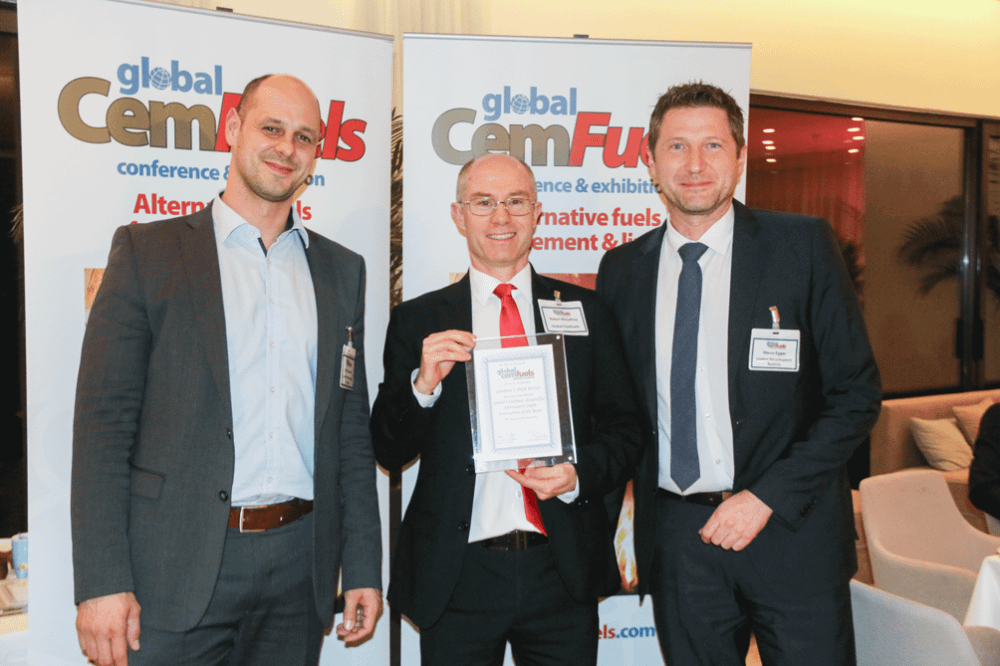
The technology was recognised with the prestigious Global CemFuels Award for Alternative Fuels Innovation of the Year at the 14th Global CemFuels Conference and Exhibition in Paphos, Cyprus.
For Lindner, the award represented its sixth Global CemFuels recognition and highlighted the company’s continued investment in technology for alternative fuel production, RDF processing and SRF production.
What Is the Lindner DEX Drive?
The Lindner DEX Drive stands for Dynamic Energy Exchange.
It is an innovative energy-management system designed for Lindner’s asynchronous twin-shaft shredders.
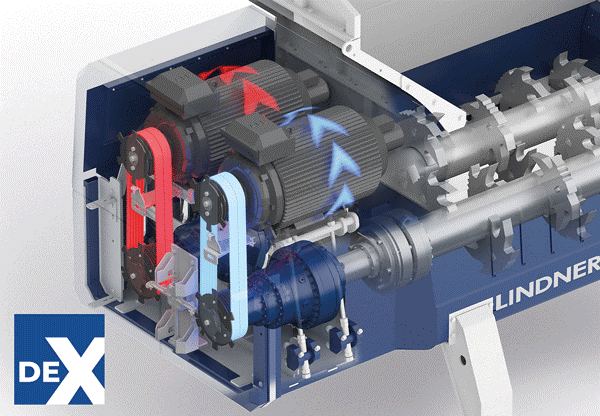
Unlike conventional systems where energy generated during braking can be lost as heat, the DEX system captures the kinetic energy generated by one shaft and transfers it to the other shaft.
This creates a more efficient use of energy within the shredding process.
The technology was first introduced on the Lindner Atlas 5500 AS twin-shaft primary shredder.
How Does DEX Drive Technology Work?
The principle behind the technology is relatively straightforward.
A twin-shaft shredder uses two shafts working together to process material.
When one shaft slows or brakes, energy is generated.
Instead of allowing that energy to dissipate as heat, the DEX Drive recovers and transfers it to the second shaft.
This allows the two shafts to work together more efficiently.
The result is a shredding system designed to:
- Reduce energy consumption
- Improve efficiency
- Respond quickly to changes in material
- Optimise shaft operation
- Reduce unnecessary energy losses
- Improve overall machine performance
Lindner reports that the drive unit can consume up to 40% less energy compared with conventional drive technology.
Why Energy Efficiency Matters in Industrial Shredding
Energy consumption is an increasingly important consideration for recycling and waste-processing businesses.
Industrial shredders can operate for long production periods and process significant quantities of material.
Even relatively small improvements in energy efficiency can therefore have a meaningful effect on operating costs over the lifetime of a machine.
For operators producing RDF, SRF and alternative fuels, energy efficiency needs to be considered alongside:
Throughput + Reliability + Maintenance + Energy Consumption + Output Quality
A machine that processes more material while using less energy can provide a significant advantage.
This is where technologies such as the Lindner DEX Drive become particularly relevant.
The Lindner Atlas 5500 AS
The Lindner Atlas 5500 AS is a heavy-duty twin-shaft primary shredder designed for demanding waste-processing applications.
The machine combines:
- Twin-shaft shredding technology
- High-performance electric drive
- Planetary gearboxes
- DEX energy recovery
- Asynchronous shaft control
- Robust cutting technology
- High throughput
- Reduced maintenance requirements
The Atlas 5500 AS was the first Lindner shredder to use the DEX Drive technology.
The machine was developed to provide consistent throughput when processing challenging waste streams while improving the efficiency of the drive system.
Faster Response to Difficult Materials
Waste isn’t consistent.
A shredder may encounter material that suddenly becomes:
- Heavier
- Wetter
- Denser
- More difficult to cut
- More contaminated
A drive system therefore needs to respond quickly to changes in load.
One of the key benefits of Lindner’s DEX technology is that the direction of the shafts can change up to three times faster than conventional drives.
This rapid response is particularly valuable when processing tough, wet or heavy materials.
Rather than allowing the shredder to struggle against a sudden increase in load, the system can react quickly to maintain the shredding process.
No Hydraulic Components
Another important feature of the DEX Drive is that it is purely electromechanical.
There are no hydraulic components within the drive system.
This has several potential benefits.
Reduced maintenance
Removing hydraulic components means fewer hydraulic components and associated maintenance requirements.
Simpler system
The drive relies on electrical and mechanical technology rather than a hydraulic system.
Reduced potential failure points
With fewer hydraulic components, there are fewer hydraulic hoses, seals and related components that could require attention.
Lindner designed the system specifically to combine energy efficiency with reduced maintenance requirements.
Winning the Global CemFuels Innovation Award
The technology was recognised at the 14th Global CemFuels Conference and Exhibition in Paphos, Cyprus.
Lindner won the award in the category:
Alternative Fuels Innovation of the Year
The company was competing against other technologies and developments from across the alternative fuels industry.
The award recognised the innovative nature of the DEX Drive and its potential to improve the efficiency of shredding technology used in alternative fuel processing.
For Lindner, it represented the company’s sixth Global CemFuels Award.
What Are Global CemFuels Awards?
The Global CemFuels Awards recognise companies, technologies and projects contributing to the development and use of alternative fuels within the cement and lime industries.
The awards cover areas including:
- Alternative fuel technology
- RDF and SRF production
- Alternative fuel projects
- Processing technology
- Innovation
- Industry leadership
Recognition at the Global CemFuels Awards is particularly relevant to shredding manufacturers because the production of consistent alternative fuels depends heavily on effective waste processing and size reduction.
The Role of Shredders in Alternative Fuel Production
Industrial shredders play a critical role in preparing waste-derived fuels.
A typical process can involve:
Waste Reception → Primary Shredding → Separation → Secondary Shredding → Screening → RDF/SRF
Primary shredders reduce large and bulky waste.
Secondary shredders then produce a more controlled material fraction suitable for the final fuel specification.
The precise configuration depends on:
- Material composition
- Moisture
- Contamination
- Required throughput
- Target particle size
- Calorific value
- End-user requirements
Choosing the correct shredding technology is therefore essential.
RDF and SRF Shredding
The terms RDF and SRF refer to waste-derived fuels used for energy recovery.
RDF – Refuse Derived Fuel
RDF is produced by processing suitable waste materials into a fuel that can be used for energy recovery.
SRF – Solid Recovered Fuel
SRF is generally produced to more tightly controlled specifications, with factors such as particle size, moisture, calorific value and contaminants considered.
For both applications, shredding plays an important role in preparing the material.
A reliable industrial shredder needs to provide consistent processing performance while operating for long periods.
Why Twin-Shaft Shredders Are Important
Twin-shaft shredders are particularly useful for primary size reduction.
The two shafts work together to grab, tear and shear incoming material.
This makes them suitable for challenging materials including:
- Municipal solid waste
- Commercial waste
- Industrial waste
- Bulky waste
- Construction-related waste
- Mixed waste streams
- Alternative fuel feedstocks
The Lindner Atlas 5500 AS combines this twin-shaft cutting principle with the DEX Drive to improve the efficiency of the overall shredding process.
Making the Most of Waste
Lindner’s philosophy is built around the principle:
“Make the Most of Waste.”
The DEX Drive is a good example of how that philosophy extends beyond simply shredding material.
Modern recycling technology needs to consider the entire process.
That means looking at:
Energy → Throughput → Maintenance → Reliability → Material Quality → Operating Costs
Improving one part of the system can have a positive impact on the overall economics of a recycling plant.
Energy Efficiency and the Cost of Shredding
Energy can represent a significant operating cost for high-throughput recycling facilities.
For a shredder operating thousands of hours per year, the difference between an inefficient and highly efficient drive system can become substantial.
The DEX Drive was developed specifically to recover energy within the shredding process rather than allowing valuable kinetic energy to be lost.
Lindner reports energy consumption reductions of up to 40% for the drive system.
Actual savings will depend on the material, operating conditions, machine configuration and application, but the principle is clear:
Recovering energy can help reduce the cost of processing waste.
Reliability Is Just as Important as Efficiency
Energy efficiency alone doesn’t make a good industrial shredder.
The machine also needs to withstand demanding operating conditions.
The Atlas 5500 AS was designed around continuous, heavy-duty operation, incorporating robust components and a high-performance electric belt drive with planetary gearbox technology.
The objective is to provide:
- Consistent throughput
- Robust operation
- Long component life
- Reduced maintenance
- High machine availability
For waste processors, this combination is critical.
After all:
A machine that isn’t running isn’t producing.
Mach Tech Services, Lindner Shredding Specialists
Mach Tech Services is the sole UK and Ireland distributor for Lindner Recyclingtech shredders.
Since 2004, Mach Tech has provided complete shredding solutions, from application consultation and machine selection through to installation, commissioning, maintenance and repair.
Our engineering team supports customers across the UK and Ireland with:
- Shredder installation
- Commissioning
- Preventative maintenance
- Emergency repairs
- Machine health assessments
- Knife gapping
- Wear-part replacement
- Precision engineering
- Welding
- Hardfacing
- Full shredder rebuilds
We also hold more than £1 million of spare and wear parts in stock, helping customers get the components they need quickly and minimise unnecessary downtime.
Looking for Energy-Efficient Shredding Technology?
If you’re considering investing in an industrial shredder for RDF, SRF, alternative fuels or general waste processing, machine selection is critical.
The right solution needs to balance:
Throughput + Energy Efficiency + Reliability + Output Quality + Maintenance
The Lindner range includes primary, secondary, universal, one-step and mobile shredders designed for different waste-processing applications.
Mach Tech can assess your material, production requirements and target output before recommending the appropriate solution.
Speak to our team today.
📞 01706 838246
✉️ sales@machtechservices.com
Frequently Asked Questions
What is the Lindner DEX Drive?
The Lindner DEX Drive is an electromechanical energy-management system developed for Lindner’s asynchronous twin-shaft shredders. It recovers kinetic energy from one shaft and transfers it to the other, improving drive efficiency.
What does DEX stand for?
DEX stands for Dynamic Energy Exchange, referring to the system’s ability to exchange and recover kinetic energy between the shredder’s shafts.
Which Lindner shredder uses DEX Drive technology?
The DEX Drive was first used in the Lindner Atlas 5500 AS twin-shaft primary shredder.
How much energy can the Lindner DEX Drive save?
Lindner states that the drive unit consumes up to 40% less energy compared with conventional drive technology. Actual energy consumption and savings depend on the specific application and operating conditions.
Why is energy efficiency important in waste shredding?
Industrial shredders can operate for thousands of hours and process large volumes of material. Improving drive efficiency can therefore help reduce energy consumption and operating costs over the machine’s working life.
Is the DEX Drive hydraulic?
No. The DEX Drive is a purely electromechanical drive system and does not use hydraulic components.
What is the Lindner Atlas 5500 AS used for?
The Atlas 5500 AS is a heavy-duty twin-shaft primary shredder designed for demanding waste-processing applications, including challenging waste streams used in RDF and SRF production.
Can Lindner shredders be used for RDF and SRF production?
Yes. Lindner has extensive experience developing shredding technology for RDF, SRF and alternative fuel applications, with Mach Tech supplying and supporting Lindner equipment in the UK and Ireland.
Does Mach Tech supply Lindner shredders in the UK?
Yes. Mach Tech Services is the sole distributor for Lindner Recyclingtech shredders in the UK and Ireland.
Does Mach Tech provide maintenance and spare parts?
Yes. Mach Tech provides installation, servicing, preventative maintenance, repairs, engineering support and spare-part supply. The company holds more than £1 million worth of spare and wear parts in stock.
Find Your Ideal Shredding Solution, Speak to Our Experts
Looking for the right setup for your operation or need guidance on applications, throughput or particle size? Our specialists are here to help.
Whether you’re exploring the capabilities of the Lindner shredder range or comparing shredding solutions, we’ll work with you to identify the best fit for your needs.
Call us today on 01706 838 246, or get in touch for expert advice, pricing, or to arrange a site visit.
You can also use the form to send your enquiry and a member of our team will be in touch shortly.
"*" indicates required fields