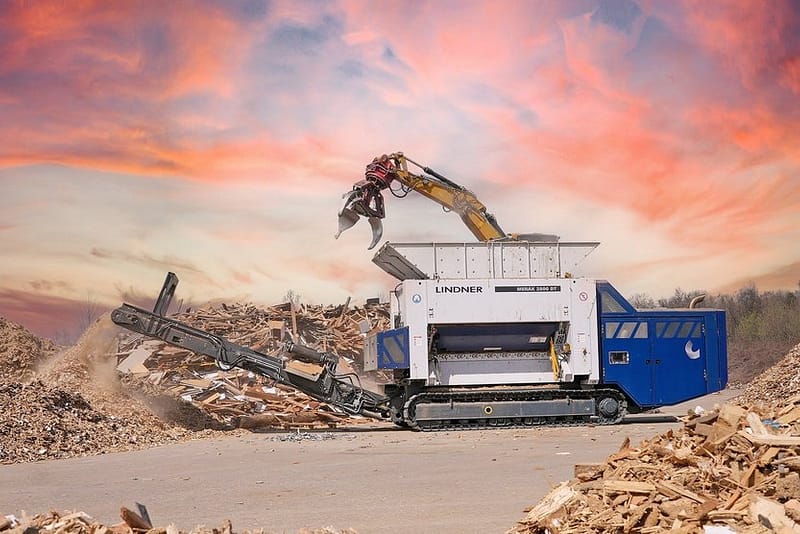
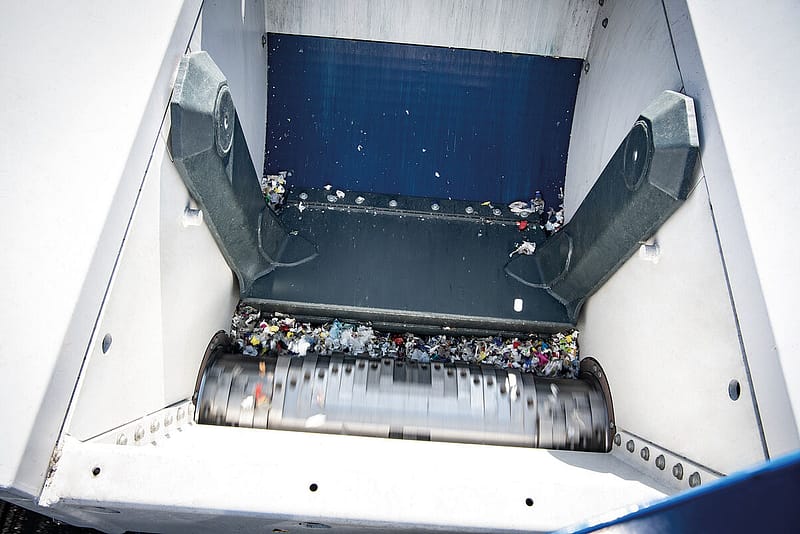
The transition towards alternative fuels is becoming increasingly important for the cement and lime industries, with waste-derived fuels providing an opportunity to recover energy from materials that would otherwise require disposal.
For Lindner Recyclingtech, developing reliable shredding technology for alternative fuel production has been a long-standing focus.
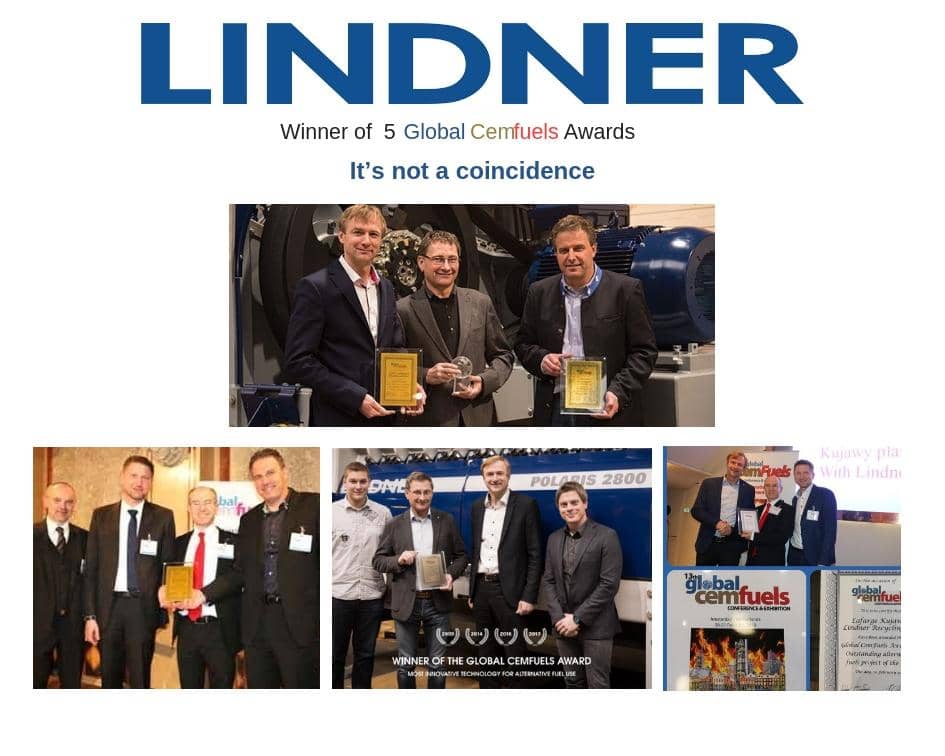
In 2019, that expertise was recognised once again when Lindner received its fifth Global CemFuels Award, following previous awards in 2009, 2014, 2016 and 2017.
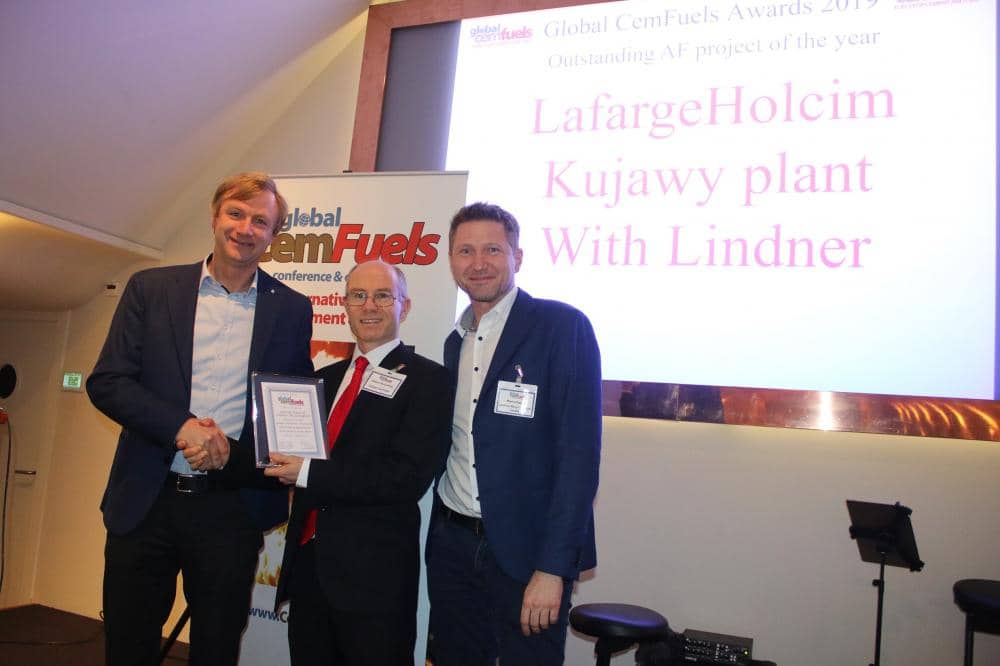
The award was presented in the category “Outstanding Alternative Fuel Project” for a project delivered with LafargeHolcim at its Kujawy cement plant in Poland.
The achievement underlines the importance of high-performance RDF and SRF shredding technology when converting waste into a usable alternative fuel.
What Are the Global CemFuels Awards?
The Global CemFuels Awards recognise companies, technologies and projects making significant contributions to the alternative fuels sector within the cement and lime industries.
The awards form part of the Global CemFuels Conference and Exhibition, an international event focused specifically on alternative fuels and their role in cement and lime production.
Categories have included:
- Alternative Fuels Supplier of the Year
- Outstanding Alternative Fuel Project
- Most Innovative Technology for Alternative Fuel Use
- Alternative Fuels-Using Company of the Year
- Alternative Fuel Project Manager of the Year
- Outstanding Contribution to the Promotion of Alternative Fuels
Winning recognition within this industry demonstrates the importance of technology that can reliably process waste into consistent alternative fuels.
Lindner’s Fifth Global CemFuels Award
The 2019 award was particularly significant for Lindner because it represented the company’s fifth Global CemFuels Award.
Previous recognition included awards in:
- 2009
- 2014
- 2016
- 2017
- 2019
Lindner’s 2019 award recognised the technology and system design behind an RDF production facility installed at LafargeHolcim’s Kujawy cement plant in Poland.
The project involved the installation of an entire facility designed to produce refuse-derived fuels for use within the cement manufacturing process.
RDF Production at LafargeHolcim’s Kujawy Plant
In 2018, Lindner installed an RDF production facility at LafargeHolcim’s Kujawy plant in Poland.
The system was designed to produce different fuel qualities through a customised processing line.
According to Lindner, the facility was one of the most modern and productive RDF production facilities in Europe at the time. The installation also had to meet demanding efficiency and safety requirements set by LafargeHolcim.
This is an important distinction when considering RDF production.
An RDF shredder isn’t simply required to make waste smaller.
The wider system needs to produce a consistent and usable fuel that meets the requirements of the final application.
What Is RDF?
Refuse-derived fuel (RDF) is produced by processing suitable waste materials into a fuel that can be used for energy recovery.
Depending on the feedstock and processing system, RDF can contain materials such as:
- Plastics
- Paper
- Cardboard
- Textiles
- Packaging
- Other combustible waste
The material is processed to remove unsuitable components and reduce the remaining waste to an appropriate specification.
The resulting fuel can then be used in applications including cement manufacturing and other industrial energy-recovery processes.
Why Shredding Is Critical to RDF Production
Shredding plays a fundamental role in RDF production.
Incoming waste can be highly variable in terms of:
- Material composition
- Density
- Size
- Moisture
- Contamination
- Calorific value
A reliable shredding system needs to handle this variation while producing a controlled output.
The objective is to create a material that can be reliably transported, stored and introduced into the subsequent combustion process.
This is why selecting the right RDF shredder is such an important part of designing an alternative fuel production system.
Lindner Polaris and One-Step RDF Processing
One of Lindner’s key technologies for alternative fuel production is the Polaris single-shaft shredder.
The Polaris was specifically developed for one-step processing of waste for applications including alternative fuel production.
Lindner describes the Polaris as a machine designed for processing untreated municipal, commercial and industrial waste into recovered fuels. Its configuration allows operators to target specific output sizes depending on the application.
The principle is straightforward:
Untreated Waste → Shredding → Controlled Fuel Fraction
Where the material and application are suitable, one-step processing can reduce the complexity of a conventional multi-stage shredding process.
The Polaris Makes Another Appearance at the 2019 Awards
Lindner’s technology was involved in a second 2019 Global CemFuels Award.
The Alternative Fuels Supplier of the Year award went to Dutch company N+P International B.V., which uses a Lindner Polaris single-shaft shredder to produce high-quality solid recovered fuels.
At the time of the award, N+P had received the Alternative Fuels Supplier of the Year award for the fifth consecutive time.
This provides another example of Lindner technology being used within commercial alternative fuel production.
RDF vs SRF: What’s the Difference?
Although the terms are sometimes used interchangeably, RDF and SRF (Solid Recovered Fuel) are not necessarily the same.
Both are produced from waste materials and can be used to recover energy.
However, SRF is generally produced to more tightly controlled quality specifications, particularly around parameters such as:
- Calorific value
- Moisture
- Chlorine
- Mercury
- Particle size
The required fuel specification depends on the end user and combustion process.
For cement plants, producing a consistent fuel can be particularly important because the fuel becomes part of a highly controlled industrial process.
Alternative Fuels in Cement Manufacturing
Cement production requires significant amounts of thermal energy.
Alternative fuels provide cement manufacturers with an opportunity to replace some conventional fossil fuels with recovered energy from suitable waste streams.
The basic process can be represented as:
Waste → Processing → RDF/SRF → Cement Kiln → Energy Recovery
This can help turn waste management from a disposal-focused process into a resource recovery opportunity.
The use of alternative fuels is therefore closely connected to broader objectives around resource efficiency and the circular economy.
Why Consistency Matters
Producing alternative fuel isn’t simply about achieving high throughput.
The final material needs to be consistent enough for the intended application.
Important characteristics can include:
Particle Size
The fuel needs to meet the requirements of the feeding and combustion system.
Calorific Value
The energy content needs to be suitable for the intended process.
Moisture
Excessive moisture can affect combustion performance and energy efficiency.
Contamination
Unwanted materials can affect equipment, emissions and fuel quality.
Composition
A stable composition helps maintain predictable fuel characteristics.
This is why modern RDF and SRF production systems require more than just a powerful shredder.
Designing an Efficient Alternative Fuel System
The Kujawy project demonstrates the importance of considering the complete processing system rather than focusing on one individual machine.
An effective alternative fuel production facility may incorporate:
Waste Reception → Pre-processing → Separation → Shredding → Screening → Fuel Quality Control → Storage → Fuel Feeding
The exact configuration depends on the incoming waste and the required fuel specification.
Lindner’s experience in complete system design allowed the Kujawy facility to produce different fuel qualities through a customised production line.
Safety Matters in RDF Processing
Alternative fuel production involves combustible materials, making safety a fundamental consideration.
RDF and SRF production facilities need to consider potential risks associated with:
- Dust
- Hot particles
- Friction
- Mechanical failures
- Foreign objects
- Material contamination
- Storage
The Kujawy project was recognised not only for its efficiency but also for meeting the high safety standards required by LafargeHolcim.
Modern shredding systems therefore need to be designed around both performance and safety.
Lindner’s Track Record in Alternative Fuels
The 2019 award wasn’t an isolated achievement.
Lindner’s history with the Global CemFuels Awards demonstrates a long-standing focus on alternative fuel processing.
In 2017, Lindner’s Polaris single-shaft shredder won the “Most Innovative Technology for Alternative Fuel Use” award. The machine had been developed specifically for one-step RDF processing and the demanding requirements of the cement and lime industry.
In 2020, Lindner received another Global CemFuels Award — its sixth — for the DEX Drive, an energy-management technology used in the Atlas 5500 AS twin-shaft shredder.
This continued recognition demonstrates Lindner’s ongoing involvement in developing technology for alternative fuel processing.
What Does This Mean for UK RDF Producers?
For UK waste and recycling companies producing RDF or SRF, the same principles apply.
The right shredding technology needs to be selected around:
Material → Throughput → Output → Fuel Specification → End User
A shredder that works well for one waste stream may not necessarily be appropriate for another.
Factors such as material composition, contamination, moisture, required particle size and downstream equipment all need to be considered.
Mach Tech Services: Lindner Alternative Fuel Specialists
Mach Tech Services supports customers across the UK and Ireland with Lindner shredding technology for RDF, SRF and alternative fuel applications.
As Lindner’s UK and Ireland distributor, Mach Tech can support customers from initial application assessment through to installation, servicing and long-term engineering support.
Our services include:
- Application consultation
- Machine selection
- Installation
- Commissioning
- Preventative maintenance
- Breakdown repairs
- Shredder servicing
- Genuine spare and wear parts
- Precision engineering
- Welding
- Hardfacing
- Machine rebuilds
The objective is simple:
Keep your shredding equipment performing reliably and your operation moving.
Looking for an RDF or SRF Shredder?
If you’re planning an RDF production plant, SRF processing line or alternative fuel system, selecting the correct shredding technology is critical.
Lindner has a proven history in this sector, from the Polaris one-step shredder through to complete alternative fuel processing systems.
Mach Tech Services can help you understand which machine and configuration is best suited to your material, required throughput and final fuel specification.
Call Mach Tech Services on 01706 838 246 to discuss your alternative fuel processing requirements.
Frequently Asked Questions
What is the Global CemFuels Award?
The Global CemFuels Awards recognise companies, projects and technologies contributing to the development and use of alternative fuels within the cement and lime industries.
How many Global CemFuels Awards has Lindner won?
The 2019 award represented Lindner’s fifth Global CemFuels Award, following previous recognition in 2009, 2014, 2016 and 2017. Lindner subsequently received another award in 2020 for its DEX Drive technology.
What did Lindner win the 2019 Global CemFuels Award for?
Lindner received the 2019 award in the Outstanding Alternative Fuel Project category alongside LafargeHolcim for the RDF production facility at the Kujawy plant in Poland.
What is an RDF shredder?
An RDF shredder is industrial shredding equipment used to reduce suitable waste materials into a controlled size for refuse-derived fuel production.
Can the Lindner Polaris produce RDF?
Yes. The Polaris was developed for one-step processing of untreated waste into recovered fuel applications and is specifically associated with RDF and SRF production.
What is SRF?
SRF stands for Solid Recovered Fuel. It is a processed waste-derived fuel produced to defined quality specifications for use in industrial energy recovery applications.
Why is particle size important when producing RDF?
Consistent particle size helps ensure the fuel can be efficiently handled, transported and fed into the intended combustion system. The required size depends on the specific end application.
Can RDF be used in cement plants?
Yes. Suitable RDF and other alternative fuels can be used in cement manufacturing, subject to the required fuel quality, plant configuration and regulatory requirements.
What Lindner shredders are suitable for alternative fuel production?
Lindner offers several shredding technologies for alternative fuel applications, including the Polaris one-step shredder and other machines configured for RDF and SRF processing.
Can Mach Tech help with RDF shredding equipment?
Yes. Mach Tech Services provides Lindner shredding equipment and engineering support for customers across the UK and Ireland, including application assessment, installation, maintenance, repairs and spare parts.
Find Your Ideal Shredding Solution, Speak to Our Experts
Looking for the right setup for your operation or need guidance on applications, throughput or particle size? Our specialists are here to help.
Whether you’re exploring the capabilities of the Lindner range or comparing shredding solutions, we’ll work with you to identify the best fit for your needs.
Call us today on 01706 838 246, or get in touch for expert advice, pricing, or to arrange a site visit.
You can also use the form to send your enquiry and a member of our team will be in touch shortly.
"*" indicates required fields