The Mick George Group and Its First Lindner Polaris 2800
When you’re processing thousands of tonnes of waste every year, the right industrial shredder can have a major impact on throughput, reliability and operating costs.
For the Mick George Group, finding a shredding solution capable of meeting the demands of high-volume RDF production was an important investment.
With almost 40 years of experience across the waste management industry and a large operational network, Mick George required equipment that could deliver consistent performance in a demanding working environment.
The solution was the Lindner Polaris 2800, the group’s first Lindner shredding system.
And according to Mick George, the results exceeded expectations.
Mick George Group chooses Lindner
The Mick George Group has grown into a major waste management and recycling business, operating across numerous sectors of the waste industry.
The scale of its operations is significant, with the company operating more than 400 HGV vehicles from over 38 sites at the time of the original installation.
As the business continued to expand its waste processing capabilities, it required machinery capable of keeping pace with the demands of modern RDF production.
Following discussions with Mach Tech Services, Mick George was introduced to the Lindner Polaris 2800.
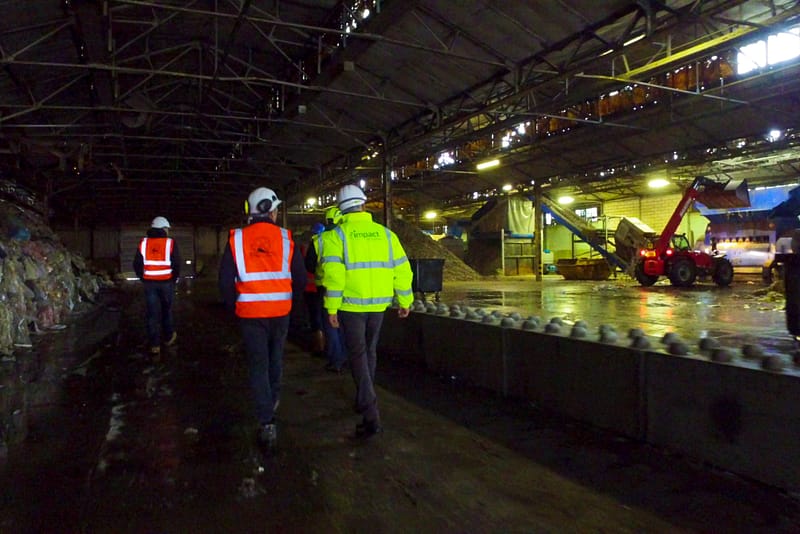
A site visit and demonstration at an existing Lindner customer provided the opportunity to see the machine operating in a real-world application before making the investment.
This practical approach helped demonstrate what the Polaris could achieve with challenging waste streams.
The Lindner Polaris 2800
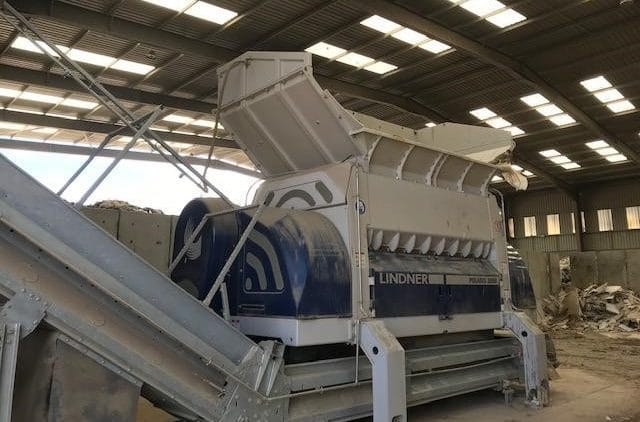
The Lindner Polaris 2800 is a high-performance single-shaft shredder designed specifically for one-step processing of untreated municipal, commercial and industrial waste.
Unlike conventional multi-stage shredding systems, the Polaris can process suitable waste into a defined fuel fraction in a single shredding stage.
This makes it particularly well suited to RDF production and alternative fuel applications.
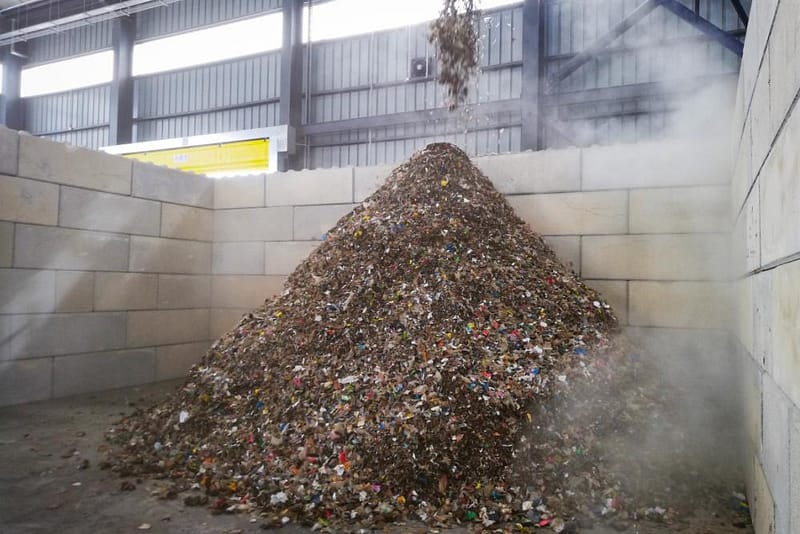
The machine is designed to produce mid-calorific fuels, typically in the 40-120 mm range depending on configuration and application, making the technology suitable for applications such as co-incineration in cement works and other energy recovery processes.
Processing up to 25 tonnes of RDF per hour
The performance of the Polaris 2800 at Mick George has been a key part of the success story.
Site Foreman Liam Rickwood reported that the machine was processing up to 25 tonnes per hour of RDF fuel stock for an incinerator at one of the group’s client sites.
More importantly, Mick George reported that the Polaris had completely exceeded expectations and was operating reliably without missing a beat.
For a high-volume waste processing operation, this level of throughput can make a significant difference.
Increasing tonnes processed per hour can help improve:
- Production capacity
- Plant utilisation
- RDF output
- Operational efficiency
- Cost per tonne
- Overall return on investment
What is RDF?
Refuse-derived fuel (RDF) is produced by processing suitable combustible waste into a fuel that can be used for energy recovery.
Depending on the waste stream and end-user requirements, RDF can contain materials such as:
- Plastics
- Paper and cardboard
- Textiles
- Wood
- Commercial waste
- Industrial waste
- Bulky waste
The aim is to recover the energy value contained within suitable waste materials.
Instead of sending combustible waste directly to disposal, it can be processed into a fuel that can be used in appropriate energy recovery facilities.
Why is one-step RDF shredding important?
Traditional RDF production can involve several stages of size reduction.
A primary shredder may initially break down the waste, followed by secondary equipment to achieve the required fuel specification.
The Lindner Polaris takes a different approach.
It was specifically developed around one-step processing, allowing suitable untreated waste to be reduced to the required fuel fraction within a single shredding stage.
This can simplify the overall process and potentially reduce the number of machines required.
The benefits can include:
- Fewer processing stages
- Reduced equipment requirements
- Lower maintenance requirements
- Reduced plant footprint
- Simplified material flow
- Potentially lower operating costs
The exact benefits depend on the feedstock, required RDF specification and complete system design.
A robust shredder for difficult waste
RDF production doesn’t involve clean, uniform materials.
Waste arriving at a processing facility can vary considerably from load to load.
It may contain bulky items, dense materials, plastics, textiles, wood and other challenging components.
An RDF shredder therefore needs to be able to deal with demanding feedstock while maintaining reliable throughput.
The Polaris uses a low-speed, high-torque shredding principle designed to apply substantial force to difficult materials.
Its robust construction and design make it suitable for demanding industrial waste applications.
Reliability matters
High throughput is only valuable if the machine can maintain it consistently.
Unplanned downtime can quickly affect production targets and increase operating costs.
For Mick George, reliability was one of the standout features of the Polaris 2800.
The company’s site team highlighted how impressed they were with the machine’s performance and described it as exceeding expectations.
For an RDF production operation, dependable shredding equipment can provide greater confidence when planning production volumes and fuel deliveries.
Training and commissioning
Buying the right shredder is only one part of a successful installation.
Operators need to understand how the machine works, how to monitor performance and how to carry out routine maintenance.
Mick George specifically praised the level of training provided by Mach Tech Services during and after commissioning.
The company reported that the comprehensive training helped its team get to grips with the Polaris and contributed to the machine being easy to work with.
This highlights the importance of choosing a supplier that provides more than simply the equipment.
Installation, commissioning, operator training, servicing and ongoing technical support can all contribute to the long-term performance of an industrial shredder.
A streamlined approach to RDF production
One of the biggest advantages of the Polaris is its ability to combine high throughput with one-step processing.
Rather than relying on multiple shredding stages, the machine can process suitable untreated waste directly into a fuel fraction.
This streamlined approach can help simplify the RDF production process.
For waste management businesses handling significant volumes of material, simplifying the process can have a major impact on plant efficiency.
Why choose a Lindner Polaris 2800?
The Lindner Polaris 2800 is designed for businesses that need reliable, high-capacity waste shredding and RDF production.
Key advantages include:
High throughput
The Polaris is engineered for demanding high-volume waste processing applications, with actual throughput dependent on material characteristics and machine configuration.
One-step processing
Suitable untreated waste can be processed into a defined fuel fraction in a single shredding stage.
High torque
The low-speed, high-torque principle provides the force required to process difficult waste streams.
Controlled output
The machine can be configured to achieve the required particle size for the intended RDF application.
Robust construction
The Polaris is designed for continuous industrial applications where reliability is essential.
RDF and alternative fuel production
The machine is particularly suited to producing recovered fuels for energy recovery applications.
The results speak for themselves
For Mick George, the Polaris 2800 represented its first investment in Lindner shredding technology.
The results provided a strong introduction to the brand.
Processing up to 25 tonnes per hour of RDF fuel stock, the machine delivered the throughput required by the operation while also earning praise from the site team for its reliability and ease of use.
The success demonstrates why choosing a shredder should be about more than simply comparing specifications.
The machine needs to be matched to the material, throughput requirements, output specification and operating environment.
Just as importantly, the supplier needs to have the technical knowledge and support infrastructure to help the customer achieve the best possible performance.
Frequently Asked Questions
What is the Lindner Polaris 2800?
The Lindner Polaris 2800 is a high-performance single-shaft industrial shredder designed for one-step processing of untreated municipal, commercial and industrial waste. It is particularly suited to RDF and alternative fuel production.
What is the Polaris 2800 used for?
The Polaris 2800 is primarily used for high-volume waste shredding and the production of recovered fuels such as RDF. It is suitable for applications where waste needs to be processed into a consistent fuel fraction.
How much can a Lindner Polaris 2800 shred per hour?
Throughput depends on the material, density, contamination, moisture, feed preparation and required output size. In the Mick George application, the Polaris 2800 was processing up to 25 tonnes per hour of RDF fuel stock.
Can the Polaris 2800 produce RDF?
Yes. The Polaris is specifically designed for one-step RDF processing and can produce a controlled fuel fraction suitable for energy recovery applications.
What materials can the Polaris 2800 process?
The Polaris is designed to process untreated municipal, commercial and industrial waste. Depending on the application, this can include mixed waste, bulky waste, plastics, textiles, paper, cardboard and other combustible materials.
What is one-step shredding?
One-step shredding means processing suitable waste into the required output fraction using a single shredding stage rather than relying on separate primary and secondary shredders.
What are the benefits of one-step RDF processing?
One-step processing can simplify the overall plant design, reduce the number of processing stages and potentially reduce equipment, maintenance and operating costs. The exact benefits depend on the material and required RDF specification.
Is the Polaris 2800 suitable for waste-to-energy applications?
Yes. The Polaris is well suited to producing recovered fuels for energy recovery applications, including incineration and co-incineration.
Why is operator training important when installing an industrial shredder?
Good operator training helps staff understand machine operation, safety, maintenance and performance monitoring. Mick George specifically praised the comprehensive training provided by Mach Tech during and after commissioning.
Who supplies Lindner shredders in the UK and Ireland?
Mach Tech Services is the sole UK and Ireland distributor for Lindner Recyclingtech shredders, providing machine sales, installation, servicing, repairs, spare parts and engineering support.
Looking for a high-performance RDF shredder?
If you’re processing commercial, industrial or municipal waste and looking to increase RDF production, the Lindner Polaris 2800 could provide the throughput, reliability and one-step processing capabilities your operation requires.
Mach Tech Services can assess your waste stream, production targets and required fuel specification before recommending the most suitable Lindner shredding solution.
Find Your Ideal Shredding Solution, Speak to Our Experts
Looking for the right setup for your operation or need guidance on applications, throughput or particle size? Our specialists are here to help.
Whether you’re exploring the capabilities of the Lindner range or comparing shredding solutions, we’ll work with you to identify the best fit for your needs.
Call us today on 01706 838 246, or get in touch for expert advice, pricing, or to arrange a site visit.
You can also use the form to send your enquiry and a member of our team will be in touch shortly.
"*" indicates required fields