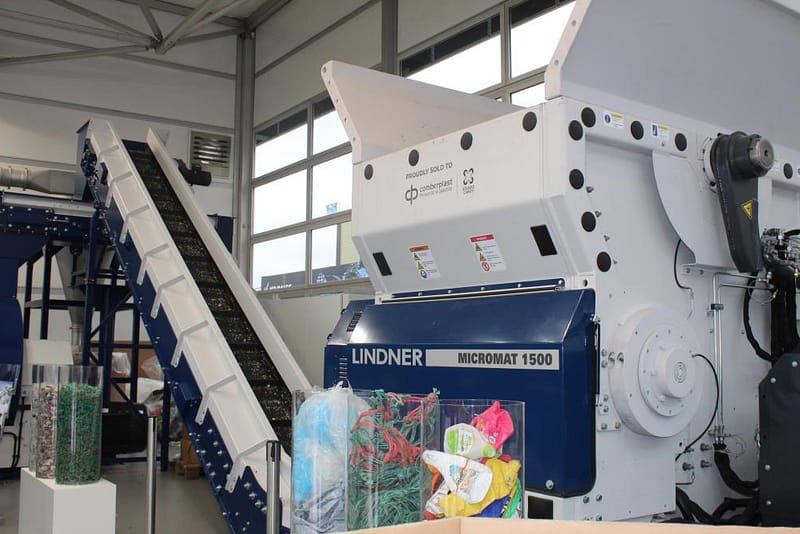
Cleaning Up Coasts with the Lindner Micromat 1500
Plastic waste from the world’s oceans and coastlines presents one of the biggest environmental challenges facing the recycling industry. Among the most difficult materials to recover are discarded fishing nets, ropes and aquaculture plastics, materials specifically designed to be incredibly strong and resistant to breaking.
In Patagonia, Chile, one recycling company is tackling that challenge head-on.
Comberplast, a pioneer in the circular economy, is using a Lindner Micromat 1500 industrial shredder to process discarded fishing nets, ropes and other plastic waste collected from the Patagonian coastline.
The project demonstrates how the right plastic recycling shredder can turn difficult waste materials into valuable secondary raw materials while helping to protect some of the world’s most important marine environments.
From fishing waste to a circular economy
Patagonia is renowned for its dramatic landscapes, fjords and coastline. However, beneath the natural beauty is another story – discarded fishing nets, ropes and other plastic materials left behind by the fishing and aquaculture industries.
For Michel Compagnon of Comberplast, these materials weren’t simply waste.
They represented an opportunity.
The idea became the foundation for the Atando Cabos project, an initiative focused on recovering discarded fishing nets, ropes and other plastics and returning them to the circular economy.
What began with a small number of material samples has developed into a major recycling operation.
According to Lindner, the project now transforms more than 3,000 tonnes of ropes and nets every year into new products. The recovered plastics can be used in applications including agriculture and mining, as well as being manufactured into products such as recycled plastic pallets.
Why are fishing nets so difficult to shred?
Fishing nets and ropes create a unique challenge for recycling equipment.
They are manufactured to withstand harsh marine environments and resist tearing, which makes them extremely durable.
That durability is useful at sea – but creates significant challenges once the material reaches a recycling facility.
The material can also arrive heavily contaminated with:
- Sand
- Stones
- Organic material
- Dirt
- Other marine debris
This means that a fishing net shredder needs to do much more than simply cut plastic.
The machine needs to deliver reliable size reduction while coping with contamination, abrasive materials and demanding operating conditions.
For Comberplast, energy efficiency and controlling wear costs were therefore important considerations when selecting a shredding system.
The Lindner Micromat 1500
Comberplast selected the Lindner Micromat 1500 as the first stage of its recycling process.
The machine was supplied with an optimised cutting system from the Mono-Fix kit, providing a configuration suited to the demanding application.
The Micromat 1500 was introduced as a new 1,500 mm rotor model within the Micromat range and was developed specifically to provide a versatile solution for plastics shredding. Lindner demonstrated the machine processing fishing nets at K 2019 in Düsseldorf.
For applications involving difficult plastics, selecting the correct rotor and cutting configuration is critical.
The Micromat platform is designed around this principle, allowing the shredding system to be configured according to the material and required output.
Turning difficult plastic waste into a resource
The purpose of shredding isn’t simply to reduce the volume of waste.
In a modern plastics recycling operation, shredding is an important first step in preparing material for subsequent stages such as cleaning, sorting, extrusion and injection moulding.
Atando Cabos takes this approach a step further.
The recovered fishing nets and ropes are processed at Comberplast’s facility in Santiago, Chile, where the material moves through the recycling process before being turned into new products.
This creates a genuine circular economy model:
Discarded fishing gear → Collection → Shredding → Cleaning → Recycling → New products
Instead of remaining in the environment or being sent to landfill, valuable plastic is recovered and given another purpose.
The importance of reliable plastic recycling equipment
For any recycling operation, reliability is critical.
A shredder that regularly stops for maintenance or struggles with difficult materials can have a significant impact on production, operating costs and profitability.
This was particularly important for Comberplast because of the nature of the material being processed.
The fishing nets and ropes are extremely resistant to tearing, while contamination from sand, stones and organic material introduces additional wear and abrasion.
After the Micromat 1500 had been operating for a year, Comberplast reported that the machine had been running reliably despite the challenging application.
Engineering a solution around the material
One of the most important considerations when choosing an industrial shredder is understanding the material before selecting the machine.
There is no single shredder configuration that is ideal for every plastic recycling application.
Factors such as:
- Material type
- Material density
- Contamination
- Moisture
- Desired output size
- Required throughput
- Wear characteristics
- Operating hours
can all influence the specification of the equipment.
This is why material testing and application knowledge are so important when investing in a plastic recycling shredder.
The Lindner Micromat 1500 was selected for Comberplast because its configuration could be adapted to the specific requirements of processing fishing nets and ropes.
A successful installation despite global challenges
The Micromat 1500 arrived at Comberplast in January 2020, just as the COVID-19 pandemic was beginning.
With international travel and on-site support severely restricted, commissioning the machine presented an additional challenge.
The installation was completed through cooperation between the Lindner team in Austria, Chilean sales partner Ingeniería Delta Limitada and Comberplast’s own technicians.
Despite the circumstances, the machine was successfully installed and commissioned.
It is a good example of why technical support and engineering expertise should be considered alongside the machine itself when investing in industrial recycling equipment.
Why the Micromat 1500 is suited to plastics recycling
The Micromat range has been developed around the requirements of plastics processing.
When the Micromat 1500 was introduced, Lindner highlighted its new cutting technology, controls and ability to handle a wide variety of plastics. The machine was also designed to communicate with downstream equipment within a recycling process.
The broader Micromat platform continues to be used in demanding plastics recycling applications. More recent Lindner projects have demonstrated the machines processing post-consumer and post-industrial plastics into flakes for subsequent recycling processes.
From marine waste to new products
The story of Comberplast and Atando Cabos demonstrates what is possible when recycling technology is combined with a clear environmental objective.
Discarded fishing nets that were once considered waste can become a valuable source of recycled plastic.
The same principle applies across the wider recycling industry.
Whether the material is fishing net, agricultural film, packaging, industrial plastics or other difficult waste streams, effective size reduction can be the first step towards recovering its value.
The Lindner Micromat 1500 provides a powerful example of how specialist shredding technology can support that process.
Frequently Asked Questions
What is the Lindner Micromat 1500?
The Lindner Micromat 1500 is an industrial single-shaft shredder designed for plastics and other demanding recycling applications. The “1500” refers to its 1,500 mm rotor length.
Can the Lindner Micromat 1500 shred fishing nets?
Yes. The Micromat 1500 was specifically demonstrated processing discarded fishing nets, and the machine has subsequently been used by Comberplast in Chile to process fishing nets and ropes recovered from the Patagonian coastline.
Why are fishing nets difficult to recycle?
Fishing nets and ropes are manufactured to be highly durable and resistant to tearing. They can also contain abrasive contamination such as sand, stones and organic material, making shredding and subsequent processing particularly challenging.
What other plastics can the Micromat 1500 process?
The Micromat is designed for a broad range of plastics recycling applications. Depending on the configuration, it can be used for materials including post-consumer and post-industrial plastics, films, ropes and other challenging plastic waste streams.
What happens to shredded fishing nets?
Shredded fishing nets can be cleaned and processed into recycled plastic flakes or other secondary raw materials. In the Comberplast project, recovered material is transformed into new products for industries including agriculture and mining.
Is the Micromat 1500 suitable for contaminated plastics?
The suitability of a shredder depends on the specific material, contamination levels and required output. The Comberplast application demonstrates the Micromat 1500 being used on fishing nets and ropes containing abrasive materials such as sand, stones and organic matter.
Why is shredder configuration important for plastic recycling?
Different plastics behave differently during shredding. The cutting system, rotor configuration and screen selection can all influence throughput, particle size, energy consumption and wear. Selecting the correct configuration is therefore essential for achieving reliable performance.
Who supplies Lindner shredders in the UK and Ireland?
Mach Tech Services is the UK and Ireland distributor for Lindner Recyclingtech shredding technology, providing access to Lindner’s industrial shredding range alongside installation, servicing, repairs, parts and engineering support.
Looking for a plastic recycling shredder?
If your business is processing difficult plastics, fishing nets, ropes, films or other challenging waste streams, choosing the right shredding technology is critical.
Mach Tech Services can help assess your material, throughput requirements and desired output before recommending the most suitable Lindner shredding solution.
Find Your Ideal Shredding Solution, Speak to Our Experts
Looking for the right setup for your operation or need guidance on applications, throughput or particle size? Our specialists are here to help.
Whether you’re exploring the capabilities of the Lindner range or comparing shredding solutions, we’ll work with you to identify the best fit for your needs.
Call us today on 01706 838 246, or get in touch for expert advice, pricing, or to arrange a site visit.
You can also use the form to send your enquiry and a member of our team will be in touch shortly.
"*" indicates required fields