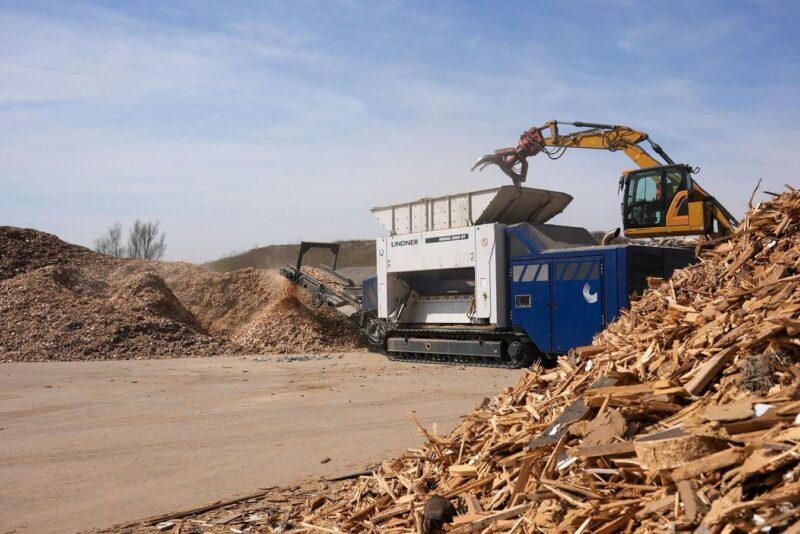
RDF line in service

The demand for efficient waste processing and alternative fuels continues to grow, making modern RDF processing lines increasingly important for waste management and recycling businesses.
A well-designed RDF processing line can transform suitable mixed commercial and construction waste into a consistent refuse-derived fuel (RDF), while also recovering valuable recyclable materials such as metals and plastics.
One example is the RDF production line installed for ALBA Nordbaden GmbH in Karlsruhe, Germany, where Lindner supplied and installed a Polaris 2800 single-stage shredder as part of a new RDF processing plant.
Following approximately four months of construction, the new facility was brought into service with the capability to produce up to 33,000 tonnes of refuse-derived fuel per year.
The project demonstrates how modern shredding, separation and sorting technology can work together to turn residual waste into a valuable alternative fuel.
What is an RDF Processing Line?
An RDF processing line is a complete waste-processing system designed to convert suitable combustible waste into refuse-derived fuel.
Rather than simply reducing waste in size, an RDF processing line can incorporate several stages to prepare material for use as an alternative fuel.
Depending on the waste stream and the specification required by the end user, a typical RDF processing system can include:
- Waste reception and feeding
- Primary shredding
- Material separation
- Metal separation
- Near-infrared sorting
- Contaminant removal
- Secondary processing where required
- Final size reduction
- Conveying and material handling
- RDF storage and discharge
The exact configuration depends on the incoming material, required throughput and final fuel specification.
For some applications, a one-step RDF shredding process can provide an efficient alternative to a more complex multi-stage system.
ALBA Nordbaden’s RDF Processing Plant
ALBA Nordbaden has operated in waste management, recycling and energy supply for more than 30 years.
The company’s new RDF production facility was designed to process mixed construction and commercial waste and recover suitable combustible material for use as an alternative fuel.
The new plant introduced primary shredding into the process and was designed to produce up to:
33,000 tonnes of RDF per year
The facility was also designed around efficient energy use, with reported energy consumption of less than 15 kWh per tonne of RDF produced.
This highlights an important consideration when designing an RDF production line.
The objective isn’t simply to maximise tonnes per hour.
The overall system needs to balance:
Throughput + fuel quality + energy consumption + reliability + operating costs
A processing line that produces high volumes but requires excessive energy or suffers from frequent downtime may not deliver the best overall cost per tonne.
How Does an RDF Processing Line Work?
The precise process varies depending on the waste stream and fuel specification, but the ALBA Nordbaden installation demonstrates how several technologies can work together.
1. Waste enters the processing system
The RDF production process begins with suitable mixed construction and commercial waste.
Because incoming waste can contain a mixture of combustible and non-combustible materials, effective separation is an important part of producing a consistent fuel.
2. Material is separated
The processing system automatically identifies and removes various materials that are unsuitable for the final RDF product.
At the ALBA Nordbaden facility, the system was designed to separate materials including:
- Recyclable plastics
- Ferrous metals
- Non-ferrous metals
- Chlorine-containing components
An overbelt magnet and near-infrared (NIR) technology were incorporated into the system.
The reported detection rate for ferrous and non-ferrous metals was around 90%.
3. Waste is shredded
Once unsuitable materials have been removed, the remaining material can be processed through the shredding stage.
This is where the Lindner Polaris 2800 plays a central role.
The Polaris was specifically developed for one-step production of refuse-derived fuel.
For the ALBA Nordbaden application, the machine was configured to produce an RDF particle size of less than 80 mm.
4. RDF is produced
The resulting processed material can then be used as refuse-derived fuel for suitable energy recovery applications, including power generation and cement production.
The quality and characteristics of the final RDF depend on the incoming waste, separation process, shredder configuration and requirements of the end user.
The Lindner Polaris 2800
The Lindner Polaris 2800 is a single-shaft industrial shredder developed for high-throughput waste processing and one-step RDF production.
The Polaris range was specifically developed around the concept of producing recovered fuel efficiently in a single processing stage.
This can offer advantages where operators are looking to simplify their process and reduce the number of individual processing stages.
For ALBA Nordbaden, the requirement was clear.
The shredder needed to process approximately 20 tonnes of input material per hour.
During a service demonstration, the Polaris 2800 exceeded this requirement by more than 15%, achieving a throughput of more than 23 tonnes per hour.
Following the successful demonstration, Lindner was awarded the contract.
The system was subsequently integrated into the new RDF processing plant within three days.
Why is Shredding Important for RDF Production?
Shredding is one of the most important stages in RDF production because it determines the physical characteristics of the processed material.
The shredder needs to handle potentially variable waste streams while producing a controlled output.
Key considerations include:
Particle size
The final RDF needs to meet the requirements of the downstream application.
For the ALBA Nordbaden plant, the Polaris 2800 was configured to produce material below 80 mm.
Throughput
An RDF processing plant needs to process sufficient material to meet production requirements.
Machine selection therefore needs to consider the tonnes per hour required, rather than simply selecting a shredder based on horsepower or machine size.
Energy consumption
Energy consumption directly affects the operating cost of producing RDF.
For high-volume facilities, even relatively small differences in energy consumption per tonne can have a significant impact on annual operating costs.
Contamination
Incoming waste can contain metals, plastics, chlorine-containing materials and other contaminants.
Effective separation and sorting help protect downstream equipment and improve the quality of the final fuel.
Reliability
For a commercial RDF production facility, downtime can have a significant financial impact.
Reliable shredding equipment, preventative maintenance and rapid access to spare and wear parts are therefore important considerations when selecting an RDF processing system.
RDF for Power Generation and Cement Plants
One of the key benefits of RDF is its ability to recover energy from suitable waste materials.
Instead of sending all residual combustible waste for disposal, suitable material can be processed into a fuel for applications such as:
- Power generation
- Cement production
- Industrial energy recovery
- Other suitable thermal processes
For cement manufacturers in particular, alternative fuels can form an important part of reducing reliance on conventional fossil fuels.
However, the fuel needs to meet the requirements of the specific combustion process.
This makes the design of the RDF processing line particularly important.
The system must be designed around the final application rather than simply the incoming waste.
RDF vs SRF: What’s the Difference?
RDF and SRF are often discussed together, but they are not necessarily the same thing.
RDF, Refuse Derived Fuel
RDF is a broad term for fuel produced by processing suitable waste for energy recovery.
Its characteristics can vary depending on the source material and processing system.
SRF, Solid Recovered Fuel
SRF is generally produced to more tightly controlled specifications.
These specifications can include factors such as:
- Calorific value
- Moisture content
- Particle size
- Chlorine content
- Mercury
- Physical composition
- Other contaminants
The appropriate processing system therefore depends on the requirements of the final fuel user.
Mach Tech supports both RDF and SRF shredding applications, with Lindner technology available across primary, secondary and one-step processing applications.
The Benefits of a One-Step RDF Shredding Process
Traditional waste processing systems can require multiple stages of size reduction.
However, one-step shredding can provide an alternative approach for suitable applications.
A one-step RDF shredder can potentially:
- Reduce the number of processing stages
- Simplify plant configuration
- Reduce material handling
- Reduce the footprint of the system
- Improve process efficiency
- Produce a controlled output in a single shredding stage
The suitability of a one-step process depends on the material, required throughput and final fuel specification.
The Lindner Polaris was specifically developed around this application and has been used for RDF and SRF production.
Choosing the Right RDF Processing Equipment
There isn’t one RDF shredder or processing system that is right for every application.
The correct solution needs to be designed around the individual waste stream and production requirements.
Important factors include:
What material are you processing?
The composition, density, moisture content and contamination level of the incoming waste will influence equipment selection.
How much material do you need to process?
Throughput requirements should be established before selecting the shredder and wider processing equipment.
What particle size is required?
The required RDF specification will influence the shredder configuration, cutting system and downstream equipment.
Where will the RDF be used?
The final fuel user may have specific requirements for particle size, moisture, calorific value and contaminants.
What is your target cost per tonne?
Energy consumption, wear costs, maintenance requirements and machine availability all contribute to the true cost of RDF production.
What level of support do you need?
An RDF processing line is a significant investment, so long-term engineering support should be considered alongside the initial machinery purchase.
Mach Tech Services: RDF Shredding Specialists
Mach Tech Services is the sole UK and Ireland distributor for Lindner Recyclingtech, providing industrial shredding equipment and engineering support for waste processing, RDF and SRF applications.
Our support extends beyond supplying a shredder.
We can assist with:
- Application assessment
- Machine selection
- RDF and SRF shredding solutions
- Plant installation
- Commissioning
- Preventative maintenance
- Breakdown support
- Genuine spare and wear parts
- Precision engineering
- Welding and hardfacing
- Shredder rebuilds
Our objective is to help customers achieve reliable, efficient and cost-effective waste processing.
Looking for an RDF Processing Line?
Whether you’re developing a new RDF production facility, upgrading an existing plant or looking to improve throughput and fuel quality, choosing the right shredding technology is critical.
The Lindner Polaris 2800 demonstrates how one-step shredding can form an important part of a modern RDF processing line, combining high throughput with controlled output and efficient processing.
However, the right solution depends on your specific waste stream, required throughput and final RDF specification.
Mach Tech Services can help assess your application and identify the most appropriate Lindner shredding technology for your requirements.
Speak to our team today.
📞
01706 838246
✉️
sales@machtechservices.com
Frequently Asked Questions
What is an RDF processing line?
An RDF processing line is a waste-processing system designed to convert suitable combustible waste into refuse-derived fuel. It can incorporate shredding, sorting, separation, screening, conveying and other processing equipment.
What is RDF?
RDF stands for Refuse Derived Fuel. It is produced by processing suitable waste materials into a fuel that can be used for energy recovery, including applications such as power generation and cement production.
What materials can be processed into RDF?
Depending on the application, RDF can be produced from suitable commercial, industrial, construction and other residual waste streams containing combustible materials. The suitability of the material depends on contamination, composition and the requirements of the final fuel user.
What shredder is used for RDF production?
The most suitable shredder depends on the waste stream, throughput and required output. Lindner offers several technologies for RDF production, including primary shredders, secondary shredders and the Polaris range of one-step RDF shredders.
What is the Lindner Polaris 2800?
The Lindner Polaris 2800 is a single-shaft industrial shredder designed for demanding waste processing applications, including one-step RDF and SRF production.
Can RDF be used in cement plants?
Yes. Suitable RDF can be used as an alternative fuel in cement manufacturing, provided it meets the requirements of the specific cement plant and combustion process.
What particle size can RDF be shredded to?
The required particle size depends on the final fuel specification and application. In the ALBA Nordbaden project, the Lindner Polaris 2800 produced RDF below 80 mm.
What is the difference between RDF and SRF?
RDF is a broad term for refuse-derived fuel, while SRF is generally produced to more controlled quality specifications. SRF specifications can include parameters such as calorific value, moisture, particle size and contaminant levels.
How much RDF can an RDF processing plant produce?
Production capacity depends on the equipment, waste stream, operating hours and plant configuration. The ALBA Nordbaden RDF facility was designed to produce up to 33,000 tonnes of RDF per year.
Why is shredder selection important for RDF production?
The shredder has a major influence on throughput, particle size, energy consumption, wear costs and overall plant availability. Selecting the correct machine therefore helps optimise both RDF quality and cost per tonne.
Can Mach Tech design an RDF processing line?
Mach Tech can provide advice on suitable Lindner shredding technology for RDF and SRF applications, including machine selection, installation, commissioning, servicing and ongoing engineering support.